A Bag of Red Lentils
What to do with one small bag of split red lentils when you want a brothy soup, a thick bowl of lentils, or a vegetable filling.
8 min read
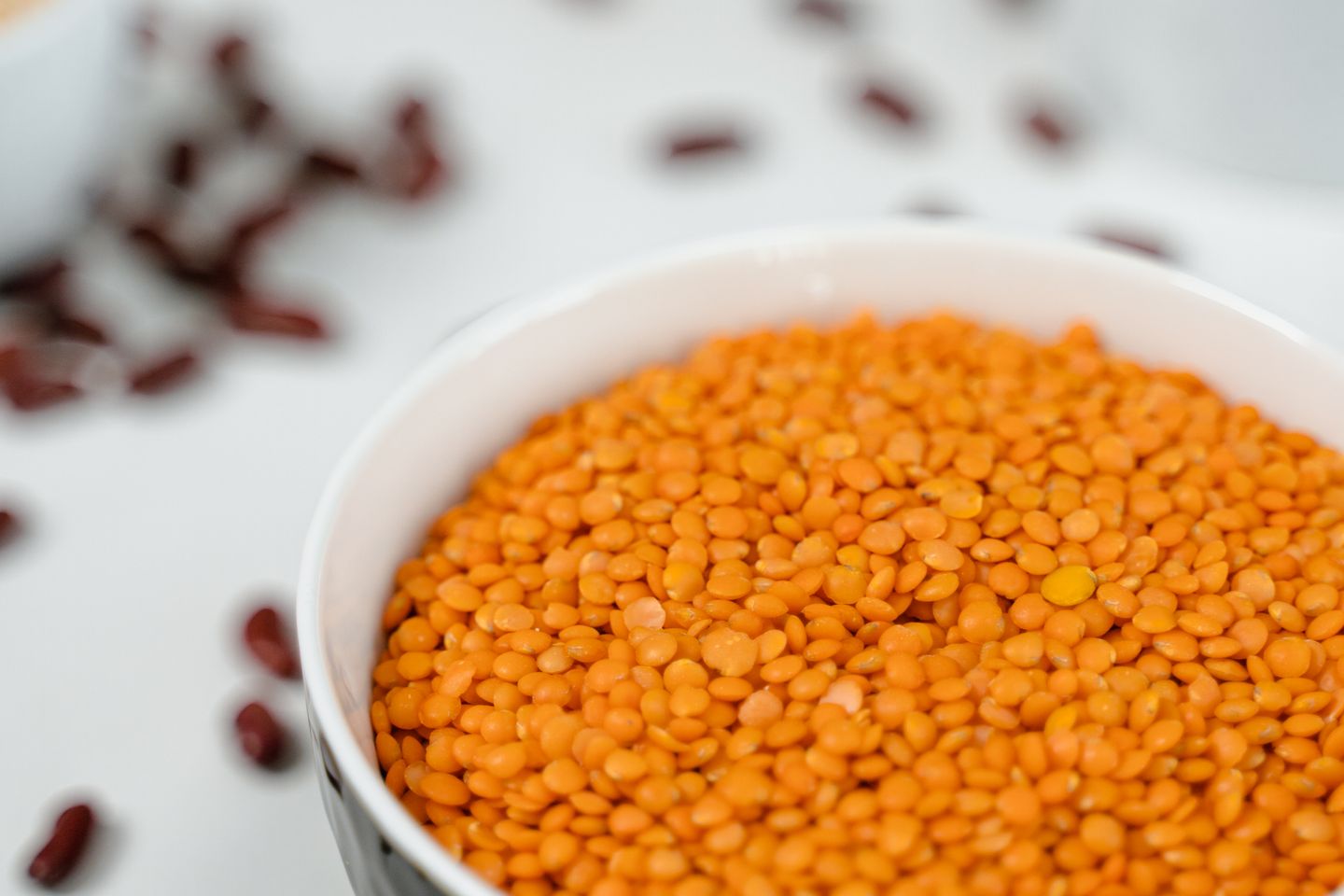
Split red lentils change appearance twice while they cook. The bright orange dry halves grow plump and yellow, then begin to disappear at the edges. A ladle drawn through the pot can still catch a few individual pieces even after the liquid has become cloudy and thick. That interval is short, but useful. A soup can come off the heat while there is still something to chew. A thicker pot meant to sit beside rice can go a little longer, until a spoon makes a path that closes slowly behind it.
Buy the split kind if this is the texture you want. They are usually sold dry in small bags or from bins, and the split pieces are often flat on one side. Whole lentils with their skins generally keep their shape longer and behave differently in the same amount of water. Color is an imperfect guide at the shelf. Read the label so you know whether you are buying whole or split. A small bag is enough for several dinners when vegetables or grains are also going into the bowl.
Rinse a measure and look at what is in it
Start with 180 grams, roughly a cup, for a pot meant to give three or four bowls. Tip it onto a pale plate or into a shallow bowl before rinsing. Pick out any small stone or fragment that clearly doesn't belong. Pour the lentils into a fine mesh strainer and rinse them under cool running water, stirring with a clean hand. Let the strainer drain. Fine pieces can slip through a colander with large holes, so this is a place for the tool you would use to strain tea or stock.
Split red lentils usually go straight into the saucepan after a rinse. Check the instructions on the bag. For a first batch, cover them with roughly 700 milliliters of water or unsalted broth if you want a moderately thick result. Keep another cup of hot water nearby. The capacity of the saucepan matters more than it seems: a shallow, broad pan loses liquid quickly, while a tall narrow pan holds steam over a small surface. A little extra water lets you work with whichever one is clean.
Bring the pot up to a boil, then lower it to a gentle simmer. Start checking after about fifteen minutes or at the lower end of the timing on the packet. A fully cooked piece should be tender when pressed between the spoon and the side of the pan. There may still be visible halves. A chalky or hard center needs more time. Stir the bottom every few minutes once the pot thickens. If a spoon begins to drag as though it is catching on the pan, add water and lower the heat before you attend to anything else.
Keep a soup loose enough to ladle
For a soup built around the lentils, dice a carrot and an onion small enough to fit several pieces on one spoon. Soften them in a spoonful of oil in a saucepan. Give the onions time to lose their raw smell before adding liquid. The carrot can still be firm. Add the rinsed lentils and roughly 900 milliliters of fresh water or mild stock. Bring the soup to a boil and lower it to a simmer. As the lentils soften, watch whether the chopped vegetables are still moving easily through the broth. Add hot water if the soup begins to sit in a heap on the ladle.
A very plain pot is a good place to use one fragrant seasoning. Toast a small pinch of cumin in the oil with the softened onion before adding the water, or put a bay leaf in with the liquid and remove it before serving. Pick one for the first batch. If you add a great deal of spice to the onion at once, it can be hard to tell which of the aromas you want the next time. A bowl that stays simple is also easy to finish differently at the table.
When the carrots and lentils are tender, taste the liquid and a piece of carrot together. Add a pinch of salt if needed. A little lemon juice or mild vinegar near the end gives a soft lentil soup a brighter finish. Test it in a spoon before squeezing half a lemon over the pot. A small addition can be enough to bring out the sweetness of the carrot. Ladle the soup as it is if you want to see each vegetable. For a thicker base with visible pieces, mash a few spoonfuls against the side of the pan and stir them back in.
Give rice a softer companion
For a pot to serve over rice, start with 180 grams of rinsed lentils and around 600 to 700 milliliters of water, depending on your saucepan. A narrow saucepan with a lid set slightly ajar helps keep the liquid from falling too far before the lentils are tender. Add a few thin slices of peeled ginger to the water. Lift them out after cooking if you want a smooth bowl without little fibrous pieces. Give the lentils a few extra minutes after they soften if you want them to fall apart.
While the lentils finish, slice a shallot thinly and cook it in a little oil over medium heat. Keep it moving as the edges turn gold. Slide the pan off the heat a little before the darkest slices are as brown as you want them; they can keep coloring in the hot oil. Spoon the shallot and some of its oil over each bowl of lentils and rice. Serve a cool vegetable or a pickle beside it if the soft textures make you want something sharper.
Before serving the thick lentils, draw a spoon across the pan and see what happens. A channel that fills gradually leaves enough body to sit on a mound of rice. A channel that stays open for a long time suggests the lentils may be starting to set. Stir in a small splash of water while the pan is still hot. A few minutes on the table will thicken the pot a little further. Getting the consistency right at this point is easier than adding water to each bowl after serving.
If you want to pack the rice and lentils for the next day, put them in separate shallow containers and refrigerate them promptly. The lentils can be reheated with a little water stirred in, while the rice benefits from a lid that traps steam. Keeping them apart also lets you decide on the second day whether you still want the combination or would prefer the lentils with bread.
Save a portion for something you can slice
A spoonful of cooked lentils helps bind finely chopped cooked vegetables. Start with a fairly thick portion and add it slowly to the vegetables, stopping once the mixture will hold together on a spoon. A pan of softened onion and finely diced carrot works, and leftover roasted cauliflower can be chopped and stirred in. Taste the mixture once it is hot and check the seasoning. A thick lentil base tends to take a pinch more salt and something acidic after the vegetables go in.
For a baked potato, split the cooked potato and roughen the soft middle with a fork. Heap on a few spoonfuls of the lentil and vegetable mixture and add a little plain yogurt or chopped parsley. For a hand pie, cook the filling until it holds a small mound, then cool it promptly before it touches raw pastry. A wet filling runs to the edges and makes a sealed pocket difficult to handle. A spoonful that sits on its own can be placed in the middle of a round with a clear margin left for pressing.
If you cooked more lentils than you can use promptly, divide them into shallow containers and refrigerate them promptly. Use the refrigerated leftovers within three to four days or freeze individual portions. Label frozen containers with the date and note whether the lentils were cooked thin or thick. The thin version can go into soup later with very little adjustment. The thick one can be stirred into a fresh saucepan of vegetables. Reheat leftovers thoroughly to 74°C or 165°F.
Keep notes by the bag
The simplest note is a line about the amount of liquid, the pan, and when the lentils first tasted tender. Add a word about the texture at serving. A small pot that seemed loose at the stove can be thick by the time everyone is seated. That is worth recording if you want a soup the second time. If it was a success over rice, the same thickening may be something to plan for. Give the rice its own spoon so the two dishes stay separate until they reach the bowl.
Taste a plain spoonful from the next pot before adding the seasonings. Red lentils have a gentle sweetness that is easy to lose under a strong broth. A little freshly cooked rice, an onion browned in oil, or a squeeze of lemon can give them a very different direction without taking over. When you return the bag to the cupboard, leave it where you will see it. A useful ingredient is one you can turn into supper before you have decided what the finished bowl should look like.