Lunch from a Stack of Tins
Pack a three-tier lunch around what each food needs from the container, and assemble a meal at the table with a minimum of fuss.
8 min read
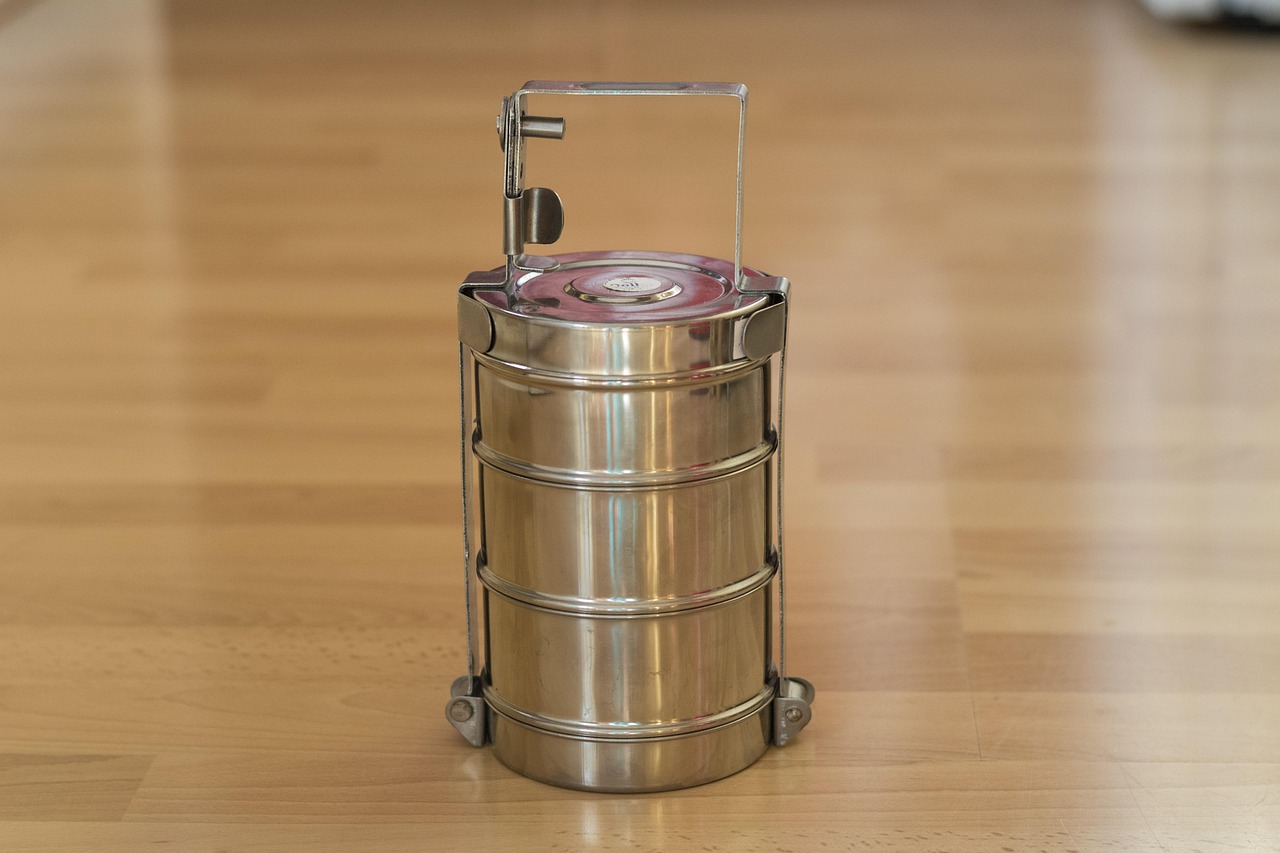
Open a lunch box with compartments arranged from side to side and the whole meal is visible at once. Open a stack of tins and the meal emerges in stages. The lid comes off, the first container is lifted away and a second dish appears. By the time the last tier comes into view, the table holds a collection of little dishes that traveled in the space of one taller container. The shape affects what is convenient to pack and how the meal feels when you sit down to eat.
Stacking containers are often called tiffin carriers, a term you will see on both simple metal stacks and newer insulated versions. There is considerable variation in the design. Some have a lid between every layer. Others rely on the tier above to close the one below. One can carry a little sauce safely when closed upright and another can let it run through the entire stack. Before buying one or planning around a carrier you already have, look at exactly how its layers fit together.
Inspect the container before planning lunch
Place the empty carrier on the table and undo the handle or clasps. Look at the lip of each tin and check where the parts touch when the stack is closed. The part that looks like a lid may be a shallow tray that fits beneath the real top. Removable seals should sit smoothly in their channels and come out for cleaning as the manufacturer directs. A thin rim that sits neatly in the next tin can be useful for keeping crumbs in place. Carrying soup through a commute is a more demanding test.
Check the maker's description for which tiers are intended to seal liquids. If the design is ambiguous, test it at home over a sink with a little cold water and keep anything that runs in a separate sealed container. Some lids need the entire stack clamped before they will stay down. An attractive little tin that cannot close by itself may work best when you know you can empty the whole carrier at the same time.
Depth matters as much as capacity. A shallow round tier can take a surprising number of thin slices while leaving only enough vertical room for a flat sandwich. A deep one will hold a large wedge, but fingers or cutlery might have trouble reaching something soft at the bottom. Think about which foods can be lifted in neat pieces and which will need a spoon. Try eating once from the container at home before taking it on a busy day.
Start with the tier that will do the most work
A three-tier lunch does not need three separately cooked recipes. Choose a base and decide what you want to eat with it. A wide lower tier might carry slices of roasted squash and some cooked barley, enough to hold their shape against each other. A smaller tier can take beans dressed with herbs. A third can hold cucumber and a lemon wedge. At lunch the barley has a place to catch the dressing, and the cucumber still has enough crunch to make the meal feel fresh. Change the squash to leftover roasted cauliflower and the plan still works.
A rolled or folded bread creates another sort of base. If the bread is dry, fold it loosely so it can be opened and filled later. Wrap it in a suitable food-safe material if other tiers might let moisture in. Pack a filling that holds together without dripping, and use a little tightly sealed container for sauce if the carrier lacks a secure compartment. The same ingredients can go into a prepared sandwich. The advantage of building it at lunch is that a saucy filling gets only a minute to soften the bread.
For the smaller tiers, think in servings before thinking in inches. A compartment that holds three handfuls of fruit can still carry one. Extra headroom makes some foods slide, so choose a different tier or use a smaller, secure insert if the contents need protection. Round fruits may roll around harmlessly. Slices that would break or turn slippery can rest against one another in a shallow layer. The simplest arrangement is the one you can unpack without holding the stack against your chest.
Account for moisture on the road
A loose spoonful of dressing and a damp piece of fruit can cause different problems. Dressing can escape through a poorly fitting rim. Fruit can stay inside its own tier and still release liquid that changes the texture of everything beside it. A sandwich sealed while its filling is very warm can turn damp from condensation. Plan for liquids to stay away from foods you want to keep crisp, and cool foods intended for cold service using safe methods before packing.
Consider the work the lid will have to do. If you fill the tin to the lip with couscous, there is nowhere to turn a spoonful without spilling onto the table. If a juicy salad sits just under an unsealed lid, a tilt on the bus can wet the tier beneath it. Give yourself enough space to serve the dish, and keep especially moist foods in leakproof containers. A spoonful of yogurt for roasted vegetables takes little room in a separate sealed pot. It makes a mess of everything around it if squeezed between two loose-fitting tiers.
Keep foods that need refrigeration chilled in transit and until lunch, and follow the carrier manufacturer's directions. An ordinary uninsulated metal stack needs help carrying food that must stay cold. For a packed lunch, USDA recommends an insulated bag with at least two cold sources, placed above and below perishable food. USDA packed lunch guidance Check what is actually available at your destination before relying on it. Plan to transfer a portion to suitable dishware for reheating when needed. A metal carrier should stay out of the microwave.
Pack for the place you will eat
At a desk, three metal tins can take more usable room than they took in a bag. Each needs somewhere to rest while you get to the next one. Set the stack on something clean and clear a space wider than the base. An empty lid that can serve as a small tray makes room for a spoon or for the peel of an orange. When you need to eat on a bench, a simpler stack with one main dish and one side is easier to manage. Pack food you can eat from the tin without cutting it against a narrow rim.
The order of layers can follow the meal. Put the food you are most likely to eat first at the top if the design allows you to open only that tier. If you need to take everything apart anyway, put something stable where the carrier balances well, then give each tier a simple role when you set it down. Make the food accessible with the cutlery you brought. A lunch of lentils and roast vegetables needs a fork or spoon, while a wedge of firm cheese and bread can make do with very little.
Utensils are easiest to remember when they have a dedicated place. If your carrier includes a slot, check that the utensil fits without blocking the lid. If you carry a napkin, wrap clean utensils separately so they stay clean until lunch. A small reusable bag for dirty items at the end can be useful when there is no place to wash up. Keep the carrier latched for the return trip. Little bits of food have a way of ending up in the bottom of a tote.
Give tomorrow a different center
Once the containers have clear jobs, variation can come from a single change. For one lunch, the base might be cooked potatoes tossed with parsley, with sliced radishes and a mustard dressing on the side. The next lunch might use the potatoes mashed lightly with chickpeas, a few leaves for scooping and a wedge of lemon. Leftovers can carry a meal forward without turning it into a smaller portion of the night before. Keep the changes tied to how you will eat. A liquid dressing can suit a quiet lunch at a table. A solid sandwich travels well when you have only a few minutes outdoors.
After you have eaten, inspect the stack before putting it away. A smear around the outer rim can tell you that the tier was too full. Damp bread might point to a lid that let moisture in or to an ingredient packed warm. Clean and dry the tins and seals according to their instructions before closing them for storage. Decide what to change the next time while you can still see how this lunch traveled. It could be as small as swapping the order of two layers or bringing a smaller spoon.
A stack of tins changes the shape of the pause as much as the shape of the bag. In the morning it helps to consider which things can touch and which need their own space. Later you get to set the pieces out and decide how much of each you want together. The pleasure is modest, but on a crowded day it is satisfying to have one part of the afternoon that can be unpacked in a deliberate order.