A Dinner of Braised Leeks
Brown leeks on their flat sides, braise until silky, and finish with mustard vinaigrette and hazelnuts for a vegetable that can hold the center of a plate.
9 min read
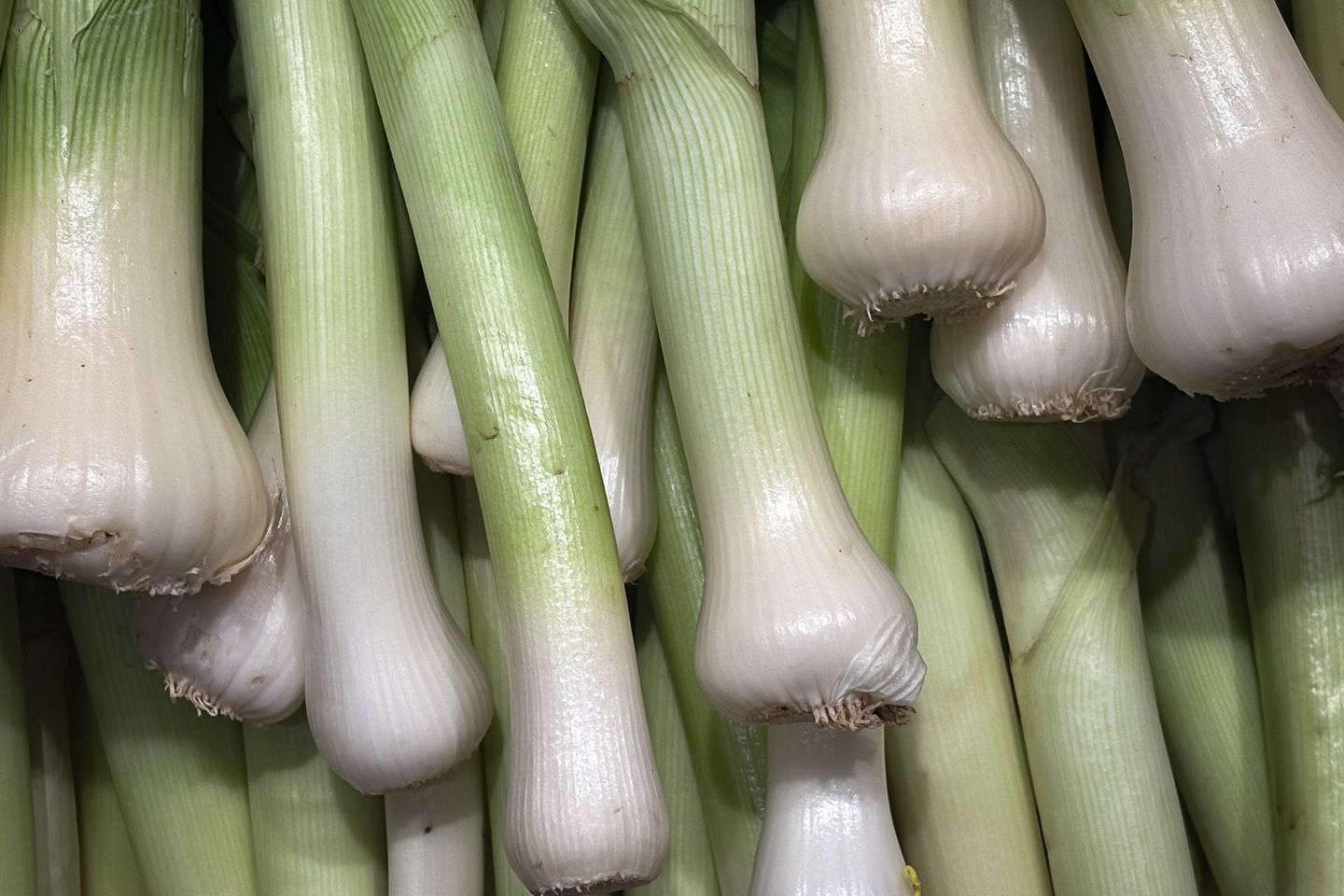
When leeks go into soup, they disappear almost completely. A leek cut in half lengthwise has a more interesting fate. The outer layers become a kind of sheath that holds the inner leaves as they soften. A fork goes through the center with almost no resistance, yet the whole half can still be lifted out of the pan. That is the advantage of treating leeks as a main dish. There is a shape to eat from, a choice about where the dressing goes, and enough surface to catch the toasted hazelnuts.
The method depends on two kinds of heat. A shallow pan browns the flat cut surfaces while the rest of the leek is still firm enough to handle. A small amount of broth finishes the cooking with the lid on. Dress the leeks while they are warm. The sharpness of mustard and cider vinegar suits a vegetable that becomes noticeably sweet as it cooks.
What to buy and what to keep
Look for leeks with substantial white and light green stalks. If the bunch has very slender stalks, buy a few extras, since two small leek halves will cook down to very little. A few marks on the dark outer leaves are normal and those leaves will be trimmed. The pale part should feel solid and the base should be clean enough to see where the roots attach. Stalks that look enormous at the top sometimes have very short white portions, so judge the bundle by the part you will be braising.
For a light dinner for two, or a generous side for four, gather the following.
- 4 medium leeks, about 2 pounds before trimming
- 1 tablespoon olive oil and 1 tablespoon unsalted butter
- 2/3 cup unsalted vegetable stock or water, plus extra if needed
- 1 small bay leaf
- 1/4 teaspoon fine sea salt, plus more to taste
- 1/4 cup hazelnuts
- 2 teaspoons Dijon mustard
- 1 tablespoon cider vinegar, plus a little extra to taste
- 2 tablespoons olive oil for the vinaigrette
- 1 tablespoon chopped fresh chives or parsley
- Freshly ground black pepper
A wide skillet with a lid gives the leeks room to touch the hot surface together. A skillet that measures 12 inches across at the rim is a good size for four medium leeks. If the only pan is smaller, brown them in two batches, then nestle them together for the braise. They can touch at that point. Avoid piling one full layer over the other, since the layers at the bottom will soften earlier and might break when you lift the top ones off.
Wash between the layers
Trim the fuzzy roots with a paring knife, leaving the solid base under them in place. Slice off the dark green tops where they become coarse, but save the inner light green leaves. Cut each trimmed leek lengthwise from tip to base, so both halves keep some of the root plate. Use your thumb to part the layers at the green end under a gentle stream of cold water. Rub any grit away with your fingers. A wash around the outside of an intact leek can miss soil several leaves down.
After washing, gently shake the halves and lay them cut-side down on a clean towel. Pat the surfaces dry. They don't have to be completely dry, but droplets caught between the leaves can splatter as they hit the hot pan. If an outer leaf has pulled off altogether, tuck it against a half during the braise or add it to the pieces saved for stock. Keep the most intact halves for the browned face that will show at the table.
Wash the dark tops separately if you plan to use them. The tougher green leaves are excellent in a stock that will be strained. Cut them into pieces the width of your palm so they fit into a bag in the freezer or take up less room in a saucepan. A small portion of young, tender green leaves can also be sliced across the grain and softened in butter for scrambled eggs. Inspect what you are saving. There is little to gain from keeping a leaf with embedded dirt or a dried, leathery tip.
Brown first, then soften under a lid
Warm the tablespoon of oil and the butter over medium heat. When the butter has melted and its foam begins to thin, put the leeks in cut-side down. Give them 3 to 6 minutes without moving them much. Lift the edge of one with a spatula to check. You want to see amber patches on the cut side and smell gently browned butter. If they color very quickly, lower the heat. Dark, brittle leaves on the bottom will come loose in the liquid and make the sauce taste burned.
Use tongs to steady each half while you turn it with a thin spatula. Leave the browned face up so it is less likely to tear on the base of the pan as it softens. Pour the stock down the side of the skillet, away from the browned faces. Add the bay leaf and the measured salt. Bring the liquid to a gentle simmer, cover the pan, and reduce the heat until you hear occasional bubbles. Cook for 15 to 22 minutes. Start checking small leeks at 12 minutes. Push the tip of a paring knife into the thickest white part, close to the base. It should slide in easily. Check another leek from a different side of the skillet if your burner heats unevenly.
If the pan is nearly dry before the leeks are tender, add 2 or 3 tablespoons of hot water and return the lid. At the other extreme, if there is quite a lot of liquid when the centers soften, lift the leeks onto a serving plate and simmer the liquid briefly with the lid off. Taste before reducing it too far, especially if you used a salted broth. A small spoonful under each leek is all the dish needs. Remove the bay leaf. Keep the browned surfaces facing up as you move the halves so there is a place for the dressing and nuts to settle.
Dress at the last minute
While the leeks cook, toast the hazelnuts in a dry skillet over medium-low heat, shaking the pan frequently. After about 5 to 8 minutes they should smell nutty and look a little darker where the skins have split. Tip them onto a plate immediately. If you leave them in the pan after turning off the heat, they may burn where they sit. When cool enough to handle, rub them in a clean towel to remove whatever skin comes away easily. Chop into coarse pieces. The smaller bits will adhere to the dressing, and the larger ones give some resistance to a mouthful of tender leek.
Whisk the mustard and vinegar in a bowl with a pinch of black pepper. Drizzle in 2 tablespoons of olive oil while whisking. Add a teaspoon of the leek cooking liquid if the dressing looks too thick to spoon. Taste it on a piece of leek, since the vegetable's sweetness makes the dressing seem less sharp than it tastes alone. A few drops more vinegar may be welcome. Add salt only after tasting the two together.
For a warm dinner, spoon the vinaigrette lengthwise down the leeks, then scatter the chopped nuts and chives. For a salad-style dish, let the leeks lose their initial steam, drain any liquid that collects on the plate, and dress them shortly before serving. If the dressing has been standing for a while, whisk again before spooning. Either way, put the nuts on last. The difference between them and the very soft vegetable is part of what makes this plate satisfying. Chopped toasted sunflower seeds work well if the meal needs to avoid hazelnuts. Omit the nuts and seeds altogether if necessary and use toasted coarse breadcrumbs for texture.
Turn the leeks into a meal
Give each diner several halves on a generous spoonful of warm, plain lentils or barley. The cooking liquid can season the grains underneath, and the vinaigrette will spread into them at the table. A drained can of green or brown lentils warmed with a spoonful of water is enough for two modest servings. For barley, cook it ahead so it is tender before you put the leeks on the stove. Warm it in a covered pan with a splash of water during the braise. This also works with a slice of toast beneath the leek, though it needs a knife and fork after it softens.
The leeks can accompany a roast without changing the recipe. They fit especially well next to potatoes or squash that comes out of a hotter oven. Braise the leeks on the stove while the other dish roasts, then hold them in their skillet with the lid ajar for a few minutes if the oven dish needs more time. Keep the heat off during the wait. In a very hot covered pan, a finished leek continues to cook until it is hard to move intact.
If the household has only two or three large leeks, consider a side dish rather than cutting every half into separate bites ahead of time. On a small platter, lay the halves closely with their ends pointing in alternating directions. Each diner can cut off the length they want. This makes the center leaves easier to lift, and diners can see the crisp layer of hazelnuts before it disappears into the warm dressing.
Use the tender ends tomorrow
Refrigerate any extra leeks promptly in a covered container. Keep spare hazelnuts in a separate dry container. Cold braised leeks are pleasant on a sandwich when you let the excess liquid drip away first. Cut the long halves across so you can bite through them without pulling a leaf out of the sandwich. Use a little mustard on the bread, add several leek pieces, and top with thinly sliced firm cheese or roasted peppers. The parts that have already been dressed are particularly good there because their acidity seasons the bread and cheese.
You can also warm the leeks gently in a skillet with a spoonful of water, then cut them into short lengths and fold them into a baked potato. Save any loose chopped herbs and nuts for the top. If you left the dressing off a portion, chop it finer and stir it into a warm grain salad with grated lemon zest. A leek that kept its shape for dinner can afford to come apart in a salad, where the ribbons carry the dressing into the smaller grains.