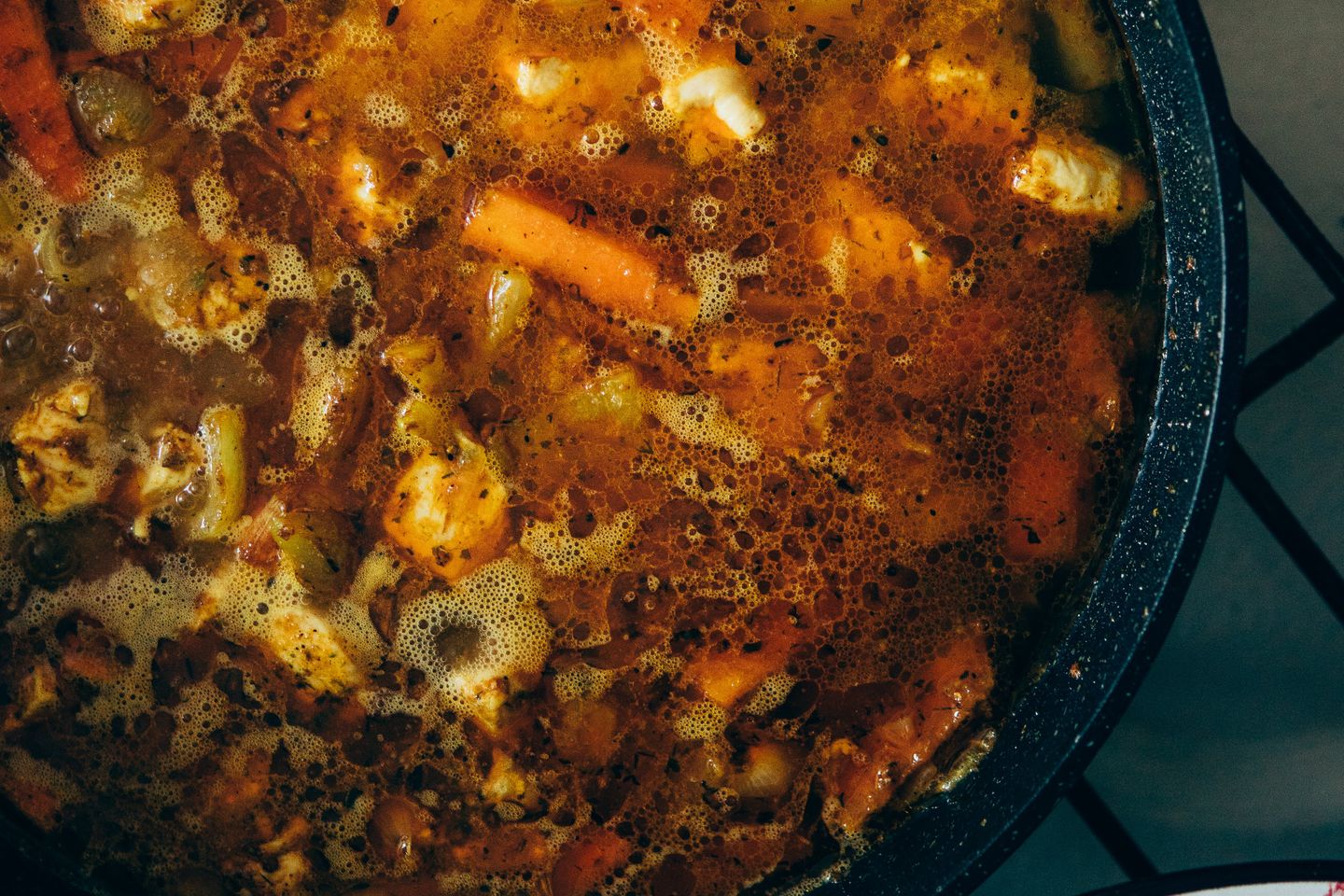
An Even Slice of Onion
Work with the curve of an onion and the shape of its layers to get slices that cook or soften at much the same rate.
8 min read
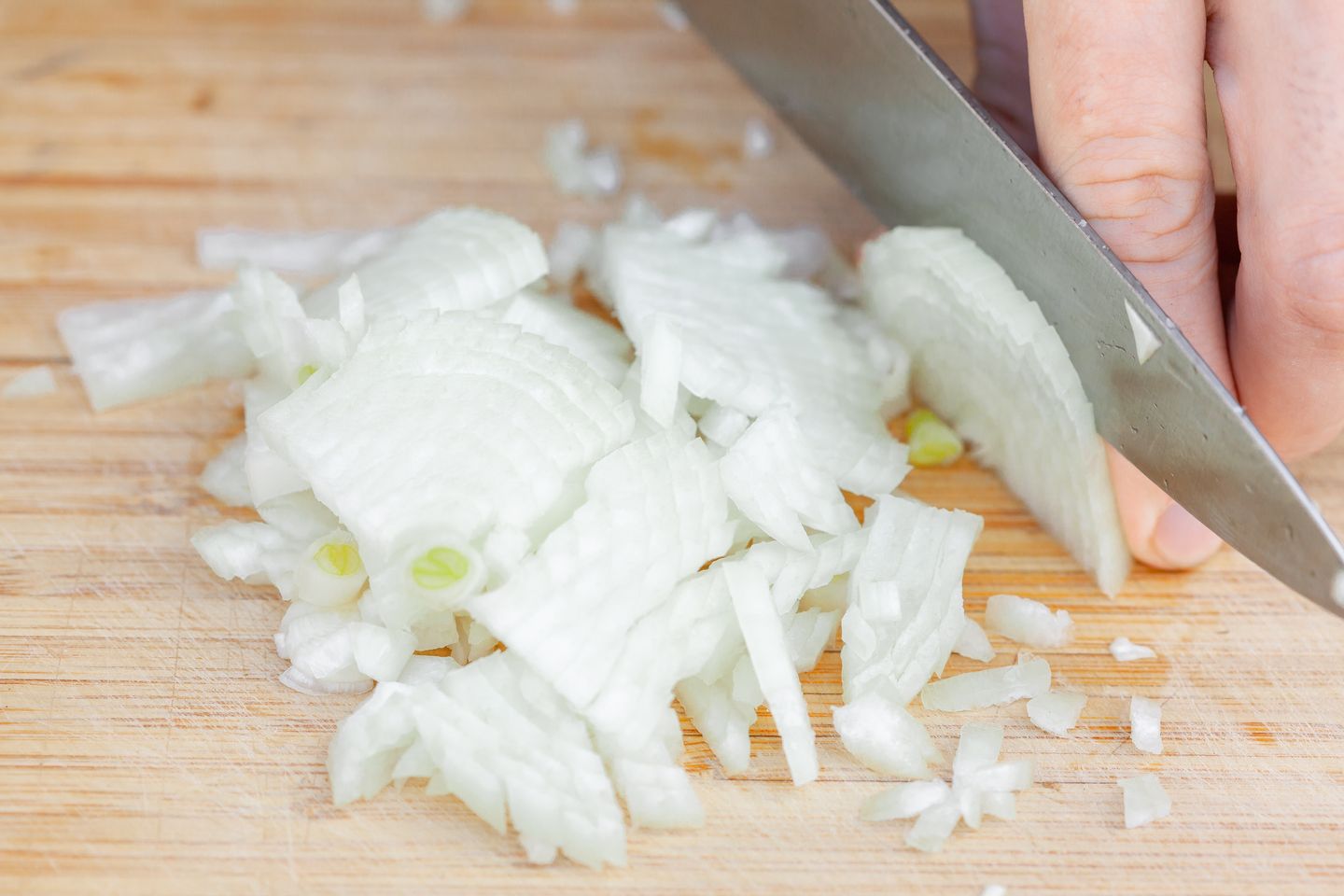
Cut an onion in two and you can get an entirely different pile from each half. On one side of the board, the slices may lie in fine lengths that slip easily through a salad. On the other, they may open into broad half rings that keep their shape in a skillet. The difference comes from where the cuts went through the curved layers. A new cook can make either pile with the same knife, once the onion is stable enough to turn and the direction of the cuts is deliberate.
Thickness matters for reasons you can see. A very fine half ring cooks quickly and can nearly disappear into a pan of beans. A thicker piece can stay firm enough to lift out of a sandwich, even after it spends a little time in dressing. The right cut makes the slices do similar work at the same time. Begin with the dish you want to make, then see how much precision it actually asks for.
Work from a flat half
Set a firm cutting board on a secure surface. If the board slides, put a damp towel underneath it. Choose a sharp kitchen knife you can hold comfortably. Peel away the papery outer layers and discard any damaged portions. When you have a long root tail or a pointed stem that keeps the onion from sitting still, trim just enough to make a steadier surface. Hold the onion with fingertips away from the edge of the blade. Slice down through the middle from the root end to the tip.
Lay the flat cut side on the board. With the onion resting on its widest surface, you can see exactly where the knife will come down. Before making the first slice, imagine a line connecting the root and stem. A cut across that line makes half rings. A series of cuts along the line makes more elongated pieces, with some slices curved in the direction of the layers. The line matters even when you have trimmed both ends. The shape is still there.
Peel the half again if a tough layer remains. A thin skin can look translucent and pass for part of a tender layer while the onion is whole. Once the pieces are cut, it pulls away into stiff strips. Removing it now lets you spend more time deciding the cut and less time sorting through the results. If the onion has dirt around the root end, clear it from the board before setting the clean half down.
Crosswise for half rings
Point the root end to the side and work from the trimmed stem toward it. Cut straight down at a steady interval to make half circles. Use a rocking or slicing motion appropriate for your knife and keep the free hand back, with knuckles guiding the side of the blade when you can do so comfortably. Let each slice fall away before the next cut. As the working piece becomes too small to hold securely, turn it to a stable face or stop and save the remaining piece for another use.
The first few slices may be smaller because the onion tapers. If you need slices of comparable length as well as comparable thickness, collect those short end pieces separately. They can go into a sauce or be used for a dish where shape matters less. The middle of the half gives the largest arcs. Pull apart one slice and inspect the pieces. The widest layers can make long ribbons that are awkward to eat in one bite. Cut a few large arcs in half if they are going into a salad or a sandwich.
A narrow half ring works well when it will be eaten raw. Taste one piece before cutting the rest. With a strong onion, a single thick piece may dominate a forkful even if the bowl has plenty of other ingredients. Thin pieces are easier to distribute. You can rinse them briefly in cold water and drain them well for a gentler taste, or dress them lightly and let them rest while you finish the other ingredients. Try one slice after the rest before deciding whether to dress the whole amount.
Lengthwise for strands
For a lengthwise cut, put the root end away from you so the line from tip to root runs along the board. Trim the ends once the half is secure. Begin with a slice from one side, moving toward the center. The outside has a rounded surface, so you can angle the first cut a little toward the center to follow the layers. As you move inward, bring the blade gradually upright. Keep the onion on the flat cut side and work slowly enough to see where the blade is headed.
A fan of lengthwise cuts produces strips that can sit together neatly in a skillet. Compare a few of them before slicing the whole onion. A shallow angle near the outside can leave a broad piece that is thick on one edge. Use an upright cut if you are more comfortable making it. You can split the widest strips afterward. For a quick dinner, modest variation is fine as long as you avoid a pile that mixes paper-thin shards with large wedges.
The lengthwise cut can be especially handy when the pieces will go into a pan with narrow slices of peppers or another vegetable. Similar shapes spread through a serving more easily and can stay separate when lifted with a fork. Match the cooking time by thickness as well as by length. A thick arc of onion and a thin strip of pepper may reach tenderness at different points. Add them in an order that suits how you want each to finish, even if they look similar on the board.
Use the pan to review your cut
If you are making a soft onion base, heat a little oil and cook the slices gently. Look for the edges to become translucent and the stiffest arcs to relax. When many small pieces color while the bigger ones stay opaque, the difference in thickness may be showing up. Move the pale pieces into better contact with the pan and lower the heat if the small pieces are browning too fast. Next time, either cut the onion more evenly or put the very fine end pieces aside.
The color can vary for another reason. Pieces heaped in the middle of a skillet are often surrounded by steam, while pieces along the edges may have more exposure to the hot pan. Spread the slices into a loose, reasonably even layer. If the skillet is too small, cook in batches or use a wider pan. Wait until the first group has softened before you draw conclusions about the thickness. The board can give you a tidy pile that still needs room at the stove.
Use a small pan and two groups of slices if you want to compare. Cut six thinner pieces and six thicker pieces from similar areas of a single onion. Cook both groups in the same pan at moderate heat, giving each group its own patch. Taste a piece from each when the thin group first turns soft. The thick group may still have some bite. That bite can be welcome with beans or under a piece of roasted fish. Let the result tell you which size to choose for that particular dinner.
Know where to spend the precision
The part of a slice you notice first depends on what it accompanies. In a cold salad with a delicate leaf, a thick piece can make one bite feel sharp and stiff. In a bowl of grains, a soft onion arc can give the spoon something distinct to catch. On top of toast, shorter pieces stay in place better than a whole half ring. Decide whether the next adjustment should be thinner, shorter or simply more consistent. Those are three separate decisions.
Hold two slices up to the light before putting them into a bowl. If one is barely visible and the other looks like part of a wedge, separate them now. The fine slice can go into a dressing. The thick piece can be sliced again while there is still a clear spot on the board. If two pieces have roughly the same thickness but different lengths, they may cook together quite happily. Uniformity is useful where it improves the result and can be judged without a ruler.
You can also prepare more than one cut from the same onion. Take a few thin half rings for a plate of vegetables, then turn the other half lengthwise for a skillet. If one of the dishes needs very little onion, use the shorter end slices and save the broad middle arcs for where they will be welcome. There is no reason to commit the entire onion to the first dish that came to mind.
When you are done, move the usable pieces into separate bowls so they do not get mixed back together. Then look at the board for the pieces that went astray. A missed piece can be a useful clue. If the thick slices all came from the last part you were holding, the issue may be a grip that became insecure near the end. If every piece is thicker on one edge, adjust how you angle the blade. After you see how the same cut behaves on the board, in the pan and in a bite, it becomes much easier to choose it again.