Finding the Right Vinaigrette
Taste the dressing on the food it will coat, and adjust its balance and texture a teaspoon at a time.
8 min read
A spoonful of vinaigrette can seem too sharp until it is spread over three lettuce leaves. Another can taste gentle from the jar and leave a bowl of beans strangely flat. In both cases, tasting the dressing alone gives only part of the answer. The job of a vinaigrette is to reach the food in a thin enough layer to season a bite without drowning the things you came to eat. The ingredients matter. So do the way you mix them and the amount that reaches the bowl.
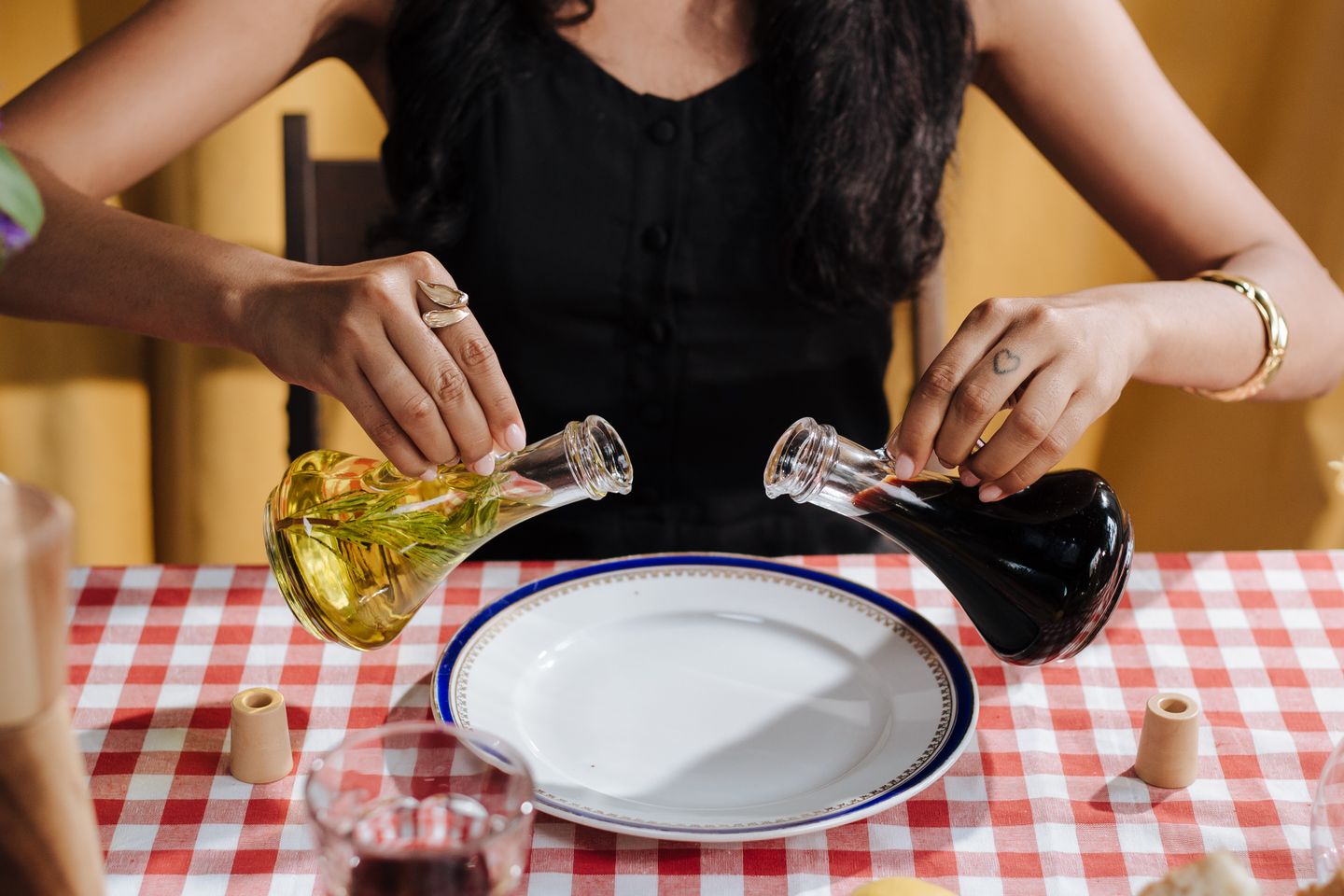
For a quick starting point, put one tablespoon of vinegar or lemon juice in a bowl with a small pinch of salt. Stir until the salt begins to dissolve, then whisk in three tablespoons of oil. Put a few drops on a piece of the food you are going to serve and taste. Start changing it from there. A ratio provides a place to begin, and a bite of the actual salad provides a reason to stop.
Taste before asking it to hold together
Make the liquid part and taste a tiny amount diluted by the food, especially if the acid is unfamiliar. Lemon juice can vary in intensity from one fruit to the next. A strong vinegar may need less than a milder one, even if both are measured in the same spoon. Use an oil that tastes good to you, because it will be part of nearly every bite. A gentle oil lets a mild acid stay noticeable. A very assertive oil can take over a dressing that tasted balanced before the ingredients met.
Salt helps to bring flavors into focus. Add a small amount early, while there is an aqueous ingredient in which it can dissolve. Then wait until you have tried the dressing on the food to decide how much more it needs. Cheese, olives or other salty additions may supply enough. When a salad tastes quiet, the problem may be a shortage of acid, a shortage of salt or a shortage of dressing on the sample. Change a spoonful in a separate bowl before changing the whole batch if you are unsure which issue you have.
Think of sweetness as an adjustment with a flavor of its own. A small amount of honey can soften a particularly sharp dressing, but it also adds an aroma that will be noticeable with mild leaves. A finely chopped sweet fruit in the salad can do some of the same balancing work. If you are dressing beans or cabbage and the first bite already feels rounded, taste the second bite with all the planned ingredients before reaching for another spoon.
Choose a mixing method for the job
Oil and the watery part of the dressing separate after sitting. Shaking in a small securely closed jar breaks the oil into small droplets for long enough to pour a well-mixed portion. Leave some empty space in the jar so the liquid has room to move. Close it and check the seal before you shake. If you need to use the dressing again later, shake it immediately before pouring. It can separate while the finished salad still tastes evenly seasoned.
Whisking offers a chance to add the oil slowly and watch how the dressing changes. Start with the acid and seasonings in a bowl large enough to move the whisk. Add a little oil and whisk until the liquid looks evenly cloudy. Pour the rest gradually, pausing if a clear pool begins to collect on the surface. For a few spoonfuls of vinaigrette, a fork and a small bowl can be adequate. Use the method that lets you control where the oil goes, especially when you are making a very small quantity.
A little mustard can help the mixture stay together longer. It also brings its own salt, acidity and taste. Begin with a small amount in the liquid before whisking in the oil, then try the dressing on a piece of food. For a simple dish where you want only citrus and oil to be apparent, you can shake them together and serve promptly. For a bowl that needs to be dressed a little earlier, a dressing with some support may make the job easier. There is no need to give every vinaigrette the same consistency.
Dress one bite before dressing the bowl
Take a leaf or a piece of cooked vegetable from the batch you will serve. Dry it if it is carrying visible drops of water. Put a little dressing on it with the end of a spoon and eat it as part of a full bite. Include a second ingredient if the salad has something especially rich, salty or sweet. The combination can tell you whether the dressing stands out enough to be noticed, or needs to sit further back.
If the bite seems greasy, first see whether there is simply too much dressing on it. Try the same mixture in a thinner layer. If it still feels heavy, add a little more acid to a sample and compare again. If the first bite is painfully sharp, try a little more oil or a smaller amount on the leaf. When the effect comes from one strong ingredient, dilution with more of the milder components can help. Make changes in small steps because a tablespoon is a large change in a four-tablespoon batch.
If the sample tastes watery, check the food as well as the dressing. A wet leaf can dilute the little bit of liquid clinging to it. A cucumber salad can release water after it is seasoned. Drain or dry the ingredients as the dish allows, then taste again. Some salads benefit from the light liquid that gathers at the bottom. Others are better served quickly so most of the vinaigrette stays where you first put it. The same adjustment will feel different on a bowl of dry leaves and on a plate of cut tomatoes.
Decide when it goes on
Delicate greens usually keep their texture best when they are dressed near serving. Put a little dressing into a wide bowl with the greens and lift the leaves gently with clean hands or utensils. Give them enough room to turn over without tearing. Add another small amount if there are still dry areas after the first toss. A leaf that gleams slightly has probably received enough. If dressing runs off the whole pile, serve it promptly and use less the next time.
A bowl of sturdy beans, grains or cooked vegetables can take the dressing earlier. Some of the liquid will move into the food and the seasoning may taste more even after a brief rest. Check again before serving. A grain salad that seemed fully dressed when warm can taste quieter after cooling, especially if a large part of the dressing settled toward the bottom. Stir gently and taste a spoonful that contains the ingredients you expect people to eat together. Add more only after that bite.
For mixed salads with delicate and sturdy pieces, dress them in stages. Spoon a small amount over the beans first. Give the leaves only what they need shortly before serving. Bring the two parts together just before the first plates are made. A separate spoonful over the top can do more for the finished dish than an extra shake stirred into the bottom. The point is to get the right amount of flavor onto each texture.
Keep a small amount back
There is an advantage to making just a little more dressing than the first toss requires. When the salad comes to the table, someone may want a sharper bite or the bottom of the bowl may need another spoonful. Set the remainder out separately if it is suitable to serve that way. A narrow spoon makes it easy to add a little without pouring several portions onto one plate. Shake or stir before serving so the last spoonful still resembles the first.
If you are making the dressing as part of a meal with more than one side, try the reserved portion on another food. A dressing made for leaves may wake up cooked potatoes. A slightly sharp one can be useful on a plate with rich cheese. Decide whether the second use needs a new ingredient or simply a smaller amount. Making a small batch and tasting it in two places can teach you more about the oil and acid than trying to settle the ratio once and using it without adjustment.
Write down the version you liked in terms you can repeat. Include the food, the vinegar or juice and how you mixed it. A note that says the dressing was right on warm beans with a spoonful left for the table is more useful than a ratio with no context. You can begin there next time, taste a coated bite and change the mixture if the beans or the rest of the meal ask for something different.
When the meal is over, look at what remains in the bowl. A thin film tells a different story from a pool under the last leaf. If the dressing was easy to taste and little remained, you found the amount that belonged to the food. If everybody reached for the jar after serving themselves, the first round could have taken a little more. The adjustment you make next time may be a smaller spoonful, a sharper mix or a later toss. Keep all three choices available.