Dried Mushrooms by the Handful
A packet of dried porcini or shiitakes can season many pots. Learn how much to soak and where the softened pieces earn their place.
8 min read
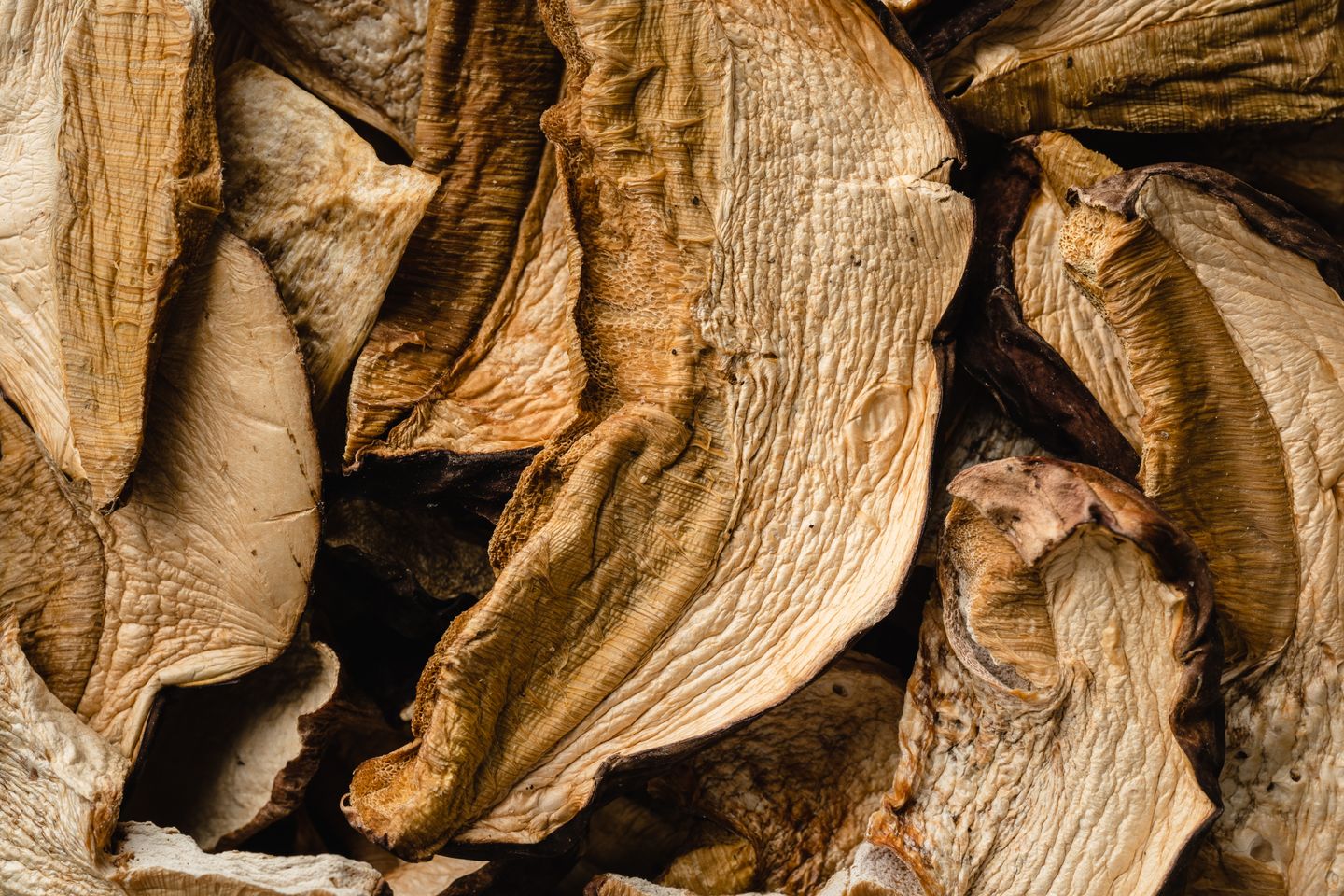
A small packet of dried mushrooms can seem expensive when you picture opening it for a single meal. Try picturing a few pieces on the cutting board instead. They are light enough to take up very little room in the cupboard, and the space they occupy in a pot of soup can be modest, too. Their job there is to flavor the onions, the barley, and the liquid between them. If you want big, juicy pieces to eat with a fork, buy some fresh mushrooms for that job and use the dried ones where their concentrated flavor makes the clearest difference.
The first question at the shelf is how you want the dish to taste. A dried shiitake has a woodsy perfume and a satisfying, slightly chewy cap when cooked. Porcini bring a richer, almost roasted smell that can make a plain pot of grains taste like it has been on the stove for a long time. A mixed bag is useful when you want both small pieces and a range of flavors. For learning what you like, a small labeled bag of one variety makes it easier to connect a scent in the pan to the next purchase.
Buy pieces that match the dish
Look at the cut and thickness through the packet if you can. Thin slices rehydrate faster than a stack of thick caps, and fragments are fine if you will chop everything anyway. Whole shiitake caps give you something substantial to slice into strips for soup. Thin porcini pieces make sense in a sauce because they soften quickly and disappear into a fine mince. A packet that contains many small fragments can still be a good choice if the contents look dry and you plan to use them a little at a time.
Buy commercially packaged edible mushrooms from a reputable source, with a legible label and preparation instructions. A label that names the type of mushroom is more useful than one that simply advertises a strong flavor. Once you open it, keep the contents in a clean, airtight container in a cool, dry cupboard and follow the storage instructions on the packet. Write the variety on a replacement container if the packet is awkward to keep. The next time you reach for the jar, you will know whether you are handling quick slices or caps that need a longer soak.
Notice how the dry pieces feel. They should be firm and dry. If moisture has got into the package and the contents have become damp, moldy, or musty, discard them. Take only the amount you want with dry hands. A dry spoon or pair of tongs is useful if you are scooping the final pieces out of the bottom. There is no need to expose the rest of the jar to steam from a boiling pot.
Soak for the center, then cook thoroughly
For a pot serving about four people, start with roughly 10 to 15 grams of dried mushrooms. If you have no scale, lay a few slices or a small handful on a saucer. The apparent volume is a rough measure, especially with whole caps. Keep notes on how strong the finished dish tastes. You can always increase the amount on a second round if the mushrooms are doing less work than you expected.
Rinse the portions you are about to prepare and follow the soaking directions on the package. Where warm water is specified, use a small bowl and enough water to cover the pieces. A clean saucer laid over the surface can hold down buoyant pieces without crushing them. Thin slices may bend readily within twenty minutes. A thick cap may still feel stiff at the center after the outside has softened. If you expect a long soak, keep it in the refrigerator from the start. Use a clean container and prepare only as much as you are going to cook.
Lift each mushroom out and press it lightly between your fingers. You should be able to cut through it without meeting a dry, hard center. A shiitake stem can stay tough after the cap is ready. Cut it away if it would be unpleasant in the finished dish. Drain the mushrooms, discard the soaking water, and cook the softened pieces thoroughly in the meal. Starting with fresh water or unsalted broth also lets you control the strength and salt of the liquid that goes into the pot.
For a creamy sauce, chop the hydrated mushrooms smaller than the other ingredients. For soup, thin strips are easier to scoop with a spoon than long, folded slices. If some pieces in a mixed bag have softened before the rest, you can slice the ready ones and let the others soak longer in the refrigerator. The few extra minutes of attention are worthwhile when one large piece might otherwise end up leathery in the center of a bowl.
Give the mushrooms time in barley soup
A barley soup brings out the difference between seasoning with mushrooms and serving a pile of them. Dice a small onion and a carrot. Soften them in a little oil, then add 10 to 15 grams of prepared dried mushrooms, sliced small. Stir until the vegetables and mushrooms are evenly mixed. Add rinsed pearled barley, water or unsalted broth, and a bay leaf. For a pot of four bowls, about 100 grams of barley and 1.2 liters of liquid make a fairly loose soup. Keep a little extra hot water on hand if you prefer the barley to swim freely.
Simmer gently until the barley is tender, checking the timing on its packet and topping up the pot if it gets too thick. The mushroom pieces will cook through as the barley softens. Taste a spoonful that contains both liquid and grain before adding salt. A soup may smell strong when you lift the lid but taste mild on the tongue. A pinch of salt can reveal more of what is already in the bowl. If it still needs lift, add a little chopped parsley or a few drops of vinegar just before serving.
Barley keeps taking up liquid after the heat goes off. If the soup will be served a little later, leave it a touch loose. If you are refrigerating leftovers, divide them promptly into shallow containers. Use extra water or broth when reheating and bring the soup to a boil. A bowl from the second day can end up pleasantly thick, with the mushroom flavor spread well beyond the pieces you can see.
Work the chopped pieces into a sauce
A spoonful of cooked, minced mushrooms can give a small pan sauce enough weight to coat noodles. Soften a little finely chopped shallot in butter or oil. Add the soaked and drained mushrooms, finely minced, and a splash of fresh unsalted broth. Simmer until the mushrooms have cooked through and the liquid has reduced slightly. For cream sauce, stir in a little cream and give it time to coat the back of a spoon. For a lighter version, add some of the starchy cooking water from the pasta and toss vigorously.
Consider the cut before you drain the pasta. Long ribbons can carry a thin, smooth coating, with a few visible flecks of mushroom clinging to the folds. Short tubes are a good home for a slightly chunkier mince. If a sauce tastes too concentrated, loosen it with a splash of fresh water before adding more fat. If it tastes dull, check salt and add a few drops of lemon at the table, where you can see how much difference it makes to one forkful.
For toast, give the same sauce another minute in the pan so it sits in a mound. Spread it to the edges just before eating. A thin layer works well if the mushrooms are strongly flavored. A bigger handful of fresh sliced mushrooms can be browned in a separate pan and stirred through the finished sauce to add volume and contrast. Keep those slices large enough to catch in the teeth of a fork.
Spend the last few pieces deliberately
The fragments at the bottom of a nearly empty package are useful for a small pot. Sort out any pieces that need a rinse, hydrate them, and mince them together. Use them with onions for a pan of beans, simmer them in a sauce for a baked potato, or put them in the liquid for a small batch of savory oats. Choose a dish mild enough that you can taste what the little pile contributes. A soup with a great deal of chili or smoked spice may not leave much room for the mushrooms to be noticed.
A simple side-by-side test works if you have two varieties. Soak and cook a few pieces of each in separate small pans with the same amount of fresh water and salt. Smell the steam and taste the cooked pieces when they are cool enough. One may remind you of a place in your usual cooking where you would like a more earthy note. The other may deserve a recipe that makes its texture visible. In the cupboard they look like modest packets. Once the right few pieces have spent time in a saucepan, there is little reason to tip the rest in.