Following the Fennel Bulb
A fennel bulb can lend its crisp center to a salad, its outer layers to a skillet, and its stalks to a pot of broth.
8 min read
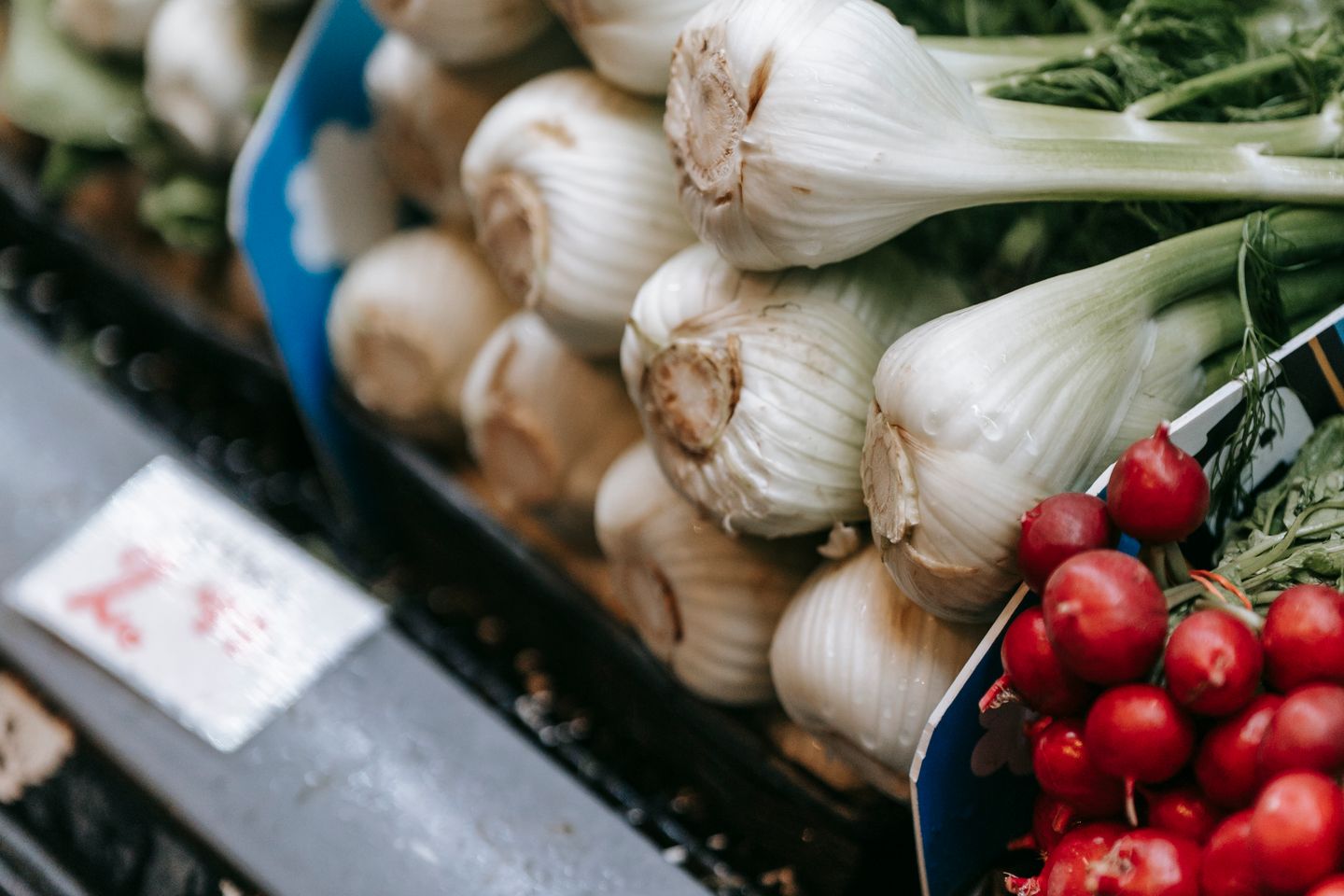
A fennel bulb looks tidy until it is on the cutting board. The smooth white base gives way to several green stalks, and there may be a cloud of feathery leaves at the top. Cutting the whole thing into one pile ignores what those parts have to offer. A fine slice from the center can be eaten raw with an orange. The outside layers are more comfortable in a pan where they have time to soften. The stalks, even when too fibrous to chew, can do good work in a saucepan of broth.
Taste a thin slice after you trim the bulb. The fragrance may remind you of anise, but how strongly it comes through varies between bulbs and between the layers of the same bulb. A mild center can be an ingredient you serve by the handful. A particularly fragrant bulb may be better in small amounts. Cooking it changes the way the scent comes forward. After a slow braise, the sweetness is often what you notice first.
Look for a bulb that can do more than one job
At the shop, pick a pale, firm bulb whose layers feel closely packed. A few dry marks on the outside are common. A soft base or a layer with extensive wet discoloration is a reason to choose another one. If the stalks are attached, look for ones that have not turned limp all the way to the bulb. Shops often trim the greens, so you may have only a few leaves. Even a small tuft is enough for the top of a salad.
Bring a bag large enough to hold the stalks without breaking them if you plan to use them. Refrigerate the bulb until you need it. When you start preparing dinner, rinse it under running water and shake out water caught near the top. Trim the stalks just above the shoulders of the bulb and set them aside. Pick the finer fronds from the stems and put them on a clean towel. A dry frond is easier to separate into little pieces without crushing it.
Set the bulb base down and cut straight through it from top to bottom. Lay one half on its flat side. The thick triangular part visible at the base is the core. It is useful to keep when you want wedges that stay together. For a salad with loose slices, remove it with two diagonal cuts. If an outer layer feels dry or tough at the widest point, take it off separately and see whether it softens when cooked. This lets you keep the good part even if the very outside edge needs trimming.
Cut the center across its ribs for a salad
For two small salads, use about half a medium bulb. Cut it into slices no thicker than the edge of a coin. A sharp knife is enough. Hold the flat side of the bulb firmly on the board and stop when it becomes too small to grip safely. The last little piece can be set flat again and cut a different way. Slices from across the ribs bend easily and show a few arcs of the bulb. Thicker slices have a strong crunch, which is pleasant in a bowl with a lot of soft fruit.
Cut an orange into bite-size pieces. Work over a clean bowl to save a spoonful of juice. Whisk the juice with two spoonfuls of olive oil and a small pinch of salt. Taste it on one raw fennel slice. If it is very sweet, add a small splash of white wine vinegar. If the fruit tastes fairly tart, leave the vinegar on the table. The goal is to dress the cut surfaces lightly enough that both orange and fennel remain easy to taste.
Toss the fennel and orange just before serving. Tear a few fronds over the bowl and save the rest for the cooked half. For a salad with more contrast, add a handful of cooked chickpeas or some toasted nuts. A firmer fruit such as apple also works, although it contributes less juice. Make the dressing separately and add a squeeze of lemon if the fruit needs a bright note. A shallow plate gives the pieces room to sit in one layer, which can help the last servings stay crisp.
Keep the core for wedges you can turn
Cut the second half into three or four wedges, leaving a narrow strip of core in each. If you saved a sound outer layer, cut that into broad strips and cook it alongside the wedges. Warm a tablespoon of olive oil in a skillet over medium heat. Lay the wedges on a cut side and leave them still until they have picked up a few gold patches. Turn them carefully with a thin spatula or tongs, supporting any piece that starts to loosen at the base.
Once both sides have colored, add enough unsalted broth to cover the bottom of the skillet. The liquid should come only a short way up the wedges. Cover the pan, lower the heat, and simmer gently. Begin checking after about ten minutes. A narrow knife should pass through the thickest part without the same hard crunch as a raw slice. Add a little more liquid if the pan goes dry before the center is tender. Thicker wedges may need several more minutes.
When the wedges are ready, uncover the pan and let any excess liquid reduce until there is just enough to spoon over the pieces. A small squeeze of lemon makes the sweeter browned surfaces taste brighter. You can put the wedges next to a bowl of grains or set them on a piece of toast with a spoonful of soft cheese. If you want a fuller sauce, add a little unsalted stock at the end and let the pieces sit in it for a minute. The outside layer, if it softened enough to eat, is useful cut into small lengths and folded into the grains.
Give the stalks a place in a simple broth
Wash the stalks well and slice away the driest tips. Some are tender close to the bulb, and a fine slice of that part can go into a soup with onion. The thicker, stringier lengths are better cut into large pieces you can lift out later. Add two or three lengths to a small pot of vegetable broth while it simmers. Other good companions are a sound carrot end, a piece of onion, and a bay leaf. Give the broth about twenty minutes and taste it before deciding whether to leave the stalks in longer.
If the fennel aroma becomes stronger than you want, lift out the stalks and dilute the broth with a little water. A bowl of beans or grain can take a moderately fragrant broth because there is plenty of other food in each spoonful. A very delicate soup needs less. Strain out the large pieces before using the liquid. Cool any broth you will keep promptly in shallow containers and refrigerate or freeze it.
Finely chop some of the fronds for the finished bowl, using only the leaves if their little stems feel tough. Their flavor is clearest just after cutting. A sprig can also go into an ordinary lemon dressing, which makes it easy to compare the smell of the green top with the mild crunch of the bulb. If you have just one small sprig, save it for the dish that has the least fennel elsewhere. Its aroma will have more room to reach the spoon.
Make the next cut fit the next dinner
For lunch the next day, tuck a few raw slices into a sandwich just before closing it. Pat them dry first so they do not soak the bread. For something softer, chop a braised wedge and put it on top of a spoonful of beans. The uncooked slices are better where you want a clear crunch, and the cooked ones are especially good with anything that has a dry or crumbly texture.
If the raw slices were what you liked best, buy a bulb with the widest solid base. Keep it whole and take off only the part you intend to slice that day. An especially firm bulb is a good choice for a lunch salad where you want it to carry a dressing for a while. For a plate of warm wedges, choose one that divides into pieces of similar size. If the bulb is uneven, trim thicker wedges a little narrower so their middles finish cooking at the same time.
The sliced part can also be cooked quickly when a plan changes. Drop it into a hot skillet with a little oil and let it go soft enough to fold through cooked pasta. Leave the stalks out of the pan if they were meant for broth. Their thickness makes them slow to tenderize alongside the bulb slices. A few fresh fronds on top can still make the smell of fennel clear when the rest of the food has absorbed some of its sweetness.
Set the trimmed bits beside one another the first time you cut a bulb. Each pile has a place it can go. A handful of shavings can freshen a plate, a few substantial wedges can be the warmest part of dinner, and the stalks can wait by the stockpot. You can make two of those things on different days without leaving a mystery piece at the back of the vegetable drawer.