Getting More from a Box Grater
Match the right face of a box grater to the food you have, then put the different textures to work in salads, sauces and quick dinners.
8 min read
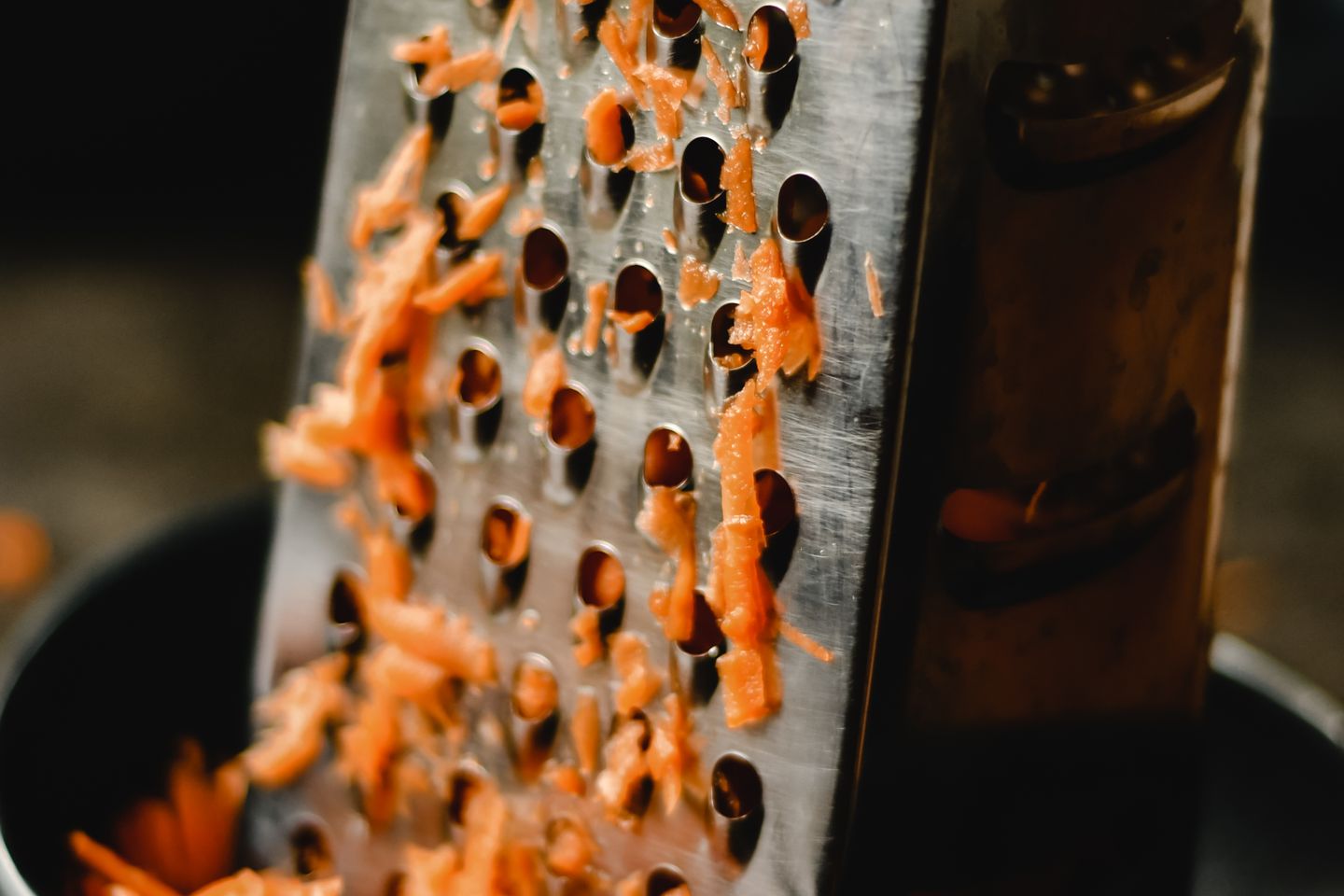
The opening under a box grater is a small place to hide the result of a lot of work. You grate a carrot, lift the box and get a loose hill of orange threads. Use a different side and the same carrot makes a compact, damp heap. One is good for a salad that needs bite. The other disappears easily into a batter or a dressing. It is worth lifting the box after the first few strokes and looking at what you made. You can still change faces while most of the carrot is intact.
Box graters vary considerably. A broad side with large holes, a side with smaller holes and a rough surface with small raised teeth are common. Another side may have a blade meant for slices. Some tools combine two of those jobs differently or leave out a face. Start by examining your own tool with the handle upright. The labels on a new box matter less than the shape of what comes out.
Put the base somewhere it can stay
Grate onto a stable cutting board or a plate with a flat area wide enough for the base. A rimmed plate can keep shreds from wandering, provided the grater has room to stand level. A damp towel underneath a slipping board can make it more secure. If the grater has an attachment designed to catch the food, check that the base sits squarely in it. The time to fix a tilted grater is before there is pressure on the handle.
With one hand holding the top, put the food against the working face with a flat or broad side leading when you can. Short controlled strokes give you more time to feel changes in resistance than a swing down the entire face. As the piece becomes too small to grip safely, stop. A compatible holder or protective glove can help according to the manufacturer's instructions. Save the remaining piece for another use or chop it with a knife on the board. Trying to get the last thin corner through the holes is rarely worth the risk to your hand.
Firm produce is easier to guide than soft pieces that bend before they meet the blade. If the item has a long, unwieldy end, cut it down to a length you can hold. A carrot cut crosswise can give you two short pieces with strong grips. A cucumber sliced into thirds may be easier to grate against a broad face than a whole cucumber that keeps levering sideways. There is no special virtue in grating the ingredient from one end to the other in one piece.
Large holes make texture you can see
The large side usually produces shreds you can lift with a fork or separate with your fingers. It is a good starting point when you want a vegetable to stay recognizable. Carrot, firm apple and kohlrabi make useful practice materials. Test a few strokes of each and see how the shreds differ in length, spring and moisture. The carrot may resist the blade and fall in firm threads. The apple may feel softer and leave a little juice behind. Those differences remain in the finished dish.
Use a bowl of grated carrot to try the effect of resting. Toss one portion with a little oil, lemon and salt and taste it immediately. Let a second portion stand briefly after dressing before tasting it. The second bowl may seem less rigid and more evenly flavored. When the shreds are meant to be part of a crisp side, dress near serving. When you want the carrots to fold into a sandwich, the short rest can make them more cooperative.
A broad face can grate cheese for a baked dish or a toasted sandwich. A block that feels firm and cool usually holds its shape against the holes. Very soft cheese can smear instead of forming distinct shreds. Stop and change tools or chill the cheese if the food and recipe allow it. You can often tear a soft cheese or slice it with a knife to get the result you need. Use the face that suits the texture, and keep the shreds loosely piled if you want to scatter them over a dish.
Fine holes spread a small amount of flavor
The smaller holes are useful when an ingredient should go through a mixture without making big pieces. A little finely grated hard cheese can travel across more of a salad than the same weight in thick curls. A small quantity of finely grated onion can dissolve into the texture of a dressing while still giving it a recognizable onion flavor. Start with less than you would use if the onion were chopped. Fine pieces distribute through every bite, and the ingredient can be surprisingly forward.
Look at what collects on the inside before adding the result. Fine teeth often leave a layer of moist food on the grater. Lift the tool away and scrape the inside with a small flexible spatula, working with care around the sharp openings. If you are grating a tiny amount of garlic or ginger, you may recover more from the inside than from the plate. A rough face can turn some ingredients into a wet pulp. That is useful in a sauce, but it is a frustrating way to make threads for a garnish.
For citrus zest, take only the colored surface and turn the fruit frequently. A test stroke lets you judge how much pressure the blade needs. When a strip of white pith is showing, move on to a fresh patch. A box grater can do the job even if you own no separate zester. It can be harder to see exactly how far you have gone, so check the fruit itself and collect the zest from the plate before turning to the next ingredient. Grate before cutting and squeezing if you need both zest and juice.
Treat the slicing blade as a separate tool
Some graters have a single slicing slot. The blade may create thin pieces with little effort, though the width and thickness are fixed by its design. Try it only with an ingredient that fits, and use the manufacturer's guard where supplied. The path is short. Set a cut piece flat against the face and see whether it moves smoothly. A rounded or very firm vegetable that rocks is easier to cut on a board, where you can make a stable base for it.
The slice attachment on one grater may be too narrow for a broad cabbage leaf and another may take half a radish comfortably. Decide whether it saves enough effort to be worthwhile. Thin cucumber slices for a sandwich or radish slices for a small plate can be good uses. If you need even wedges for a roasting tray or you want to control the thickness closely, a knife gives you a different set of choices.
Watch where the slices land. A slice pressed against the interior wall can collect the next one and block the opening. Empty the grater after a small batch. If a piece jams, put the tool down and clear it carefully from the inside with a suitable utensil. The same pause is useful when the box gets full of shreds. Lifting it every so often keeps the food loose and prevents you from pressing the earlier shreds into a damp mass.
Decide where the liquid should go
A grated vegetable has more exposed surface than it did whole. Salt draws liquid out of shredded cucumber and zucchini, and a handful of shreds can feel wetter after sitting a short while. Plan for that water according to what you are making. In a cucumber and yogurt mixture, briefly draining the grated cucumber in a fine sieve can keep the finished sauce from becoming thin. In a soup, the liquid from a grated tomato may be exactly what you need.
For a grated vegetable pancake, make a small first pancake before committing the whole bowl. If liquid is pooling in the raw mixture and the pancake spreads too far, check the recipe's instructions on draining. Some methods call for squeezing the vegetable before mixing. If a shred is meant for a salad and already seems tender, a light toss with dressing can be enough. Squeezing changes the texture as well as the moisture, so try it on a little portion when the right result is uncertain.
After you finish, clean the grater before bits dry in the holes. Check whether the maker recommends hand washing. Rinse from the inside and use a suitable brush on the outside with your fingers away from the cutting surfaces. Hold it by the handle and set it where it can drain. Food that takes a moment to rinse away while fresh can take much longer once it has hardened around the teeth.
The best way to make the tool familiar is to give one ingredient two jobs. Grate the bulk of a carrot through the large holes for dinner, then run a small piece against the fine holes to stir into a lemon dressing. Lift the box between the two and look at what you have. After dinner you may remember how one pile crunched and the other all but vanished into the dressing. The next time you pick up the grater, that difference will make the choice of face a quick one.