The First Cut in a Cabbage
Give the whole head a stable place on the board, then use the core and the curves of the leaves to get the cut your dish needs.
8 min read
A cabbage often demands one awkward minute before it becomes easy to work with. The head is round, the leaves hide the core and a knife that seems long enough may barely reach the center. It is tempting to force the blade through in one motion. Look at the head first. The flat end where it grew, the sweep of the outer leaves and the width of your board are enough to suggest a better approach.
The first decision belongs to the dish. Wedges that are going into an oven need a little core to keep them together. Strips destined for a salad are easier to eat when the thickest section of core has been removed. A few broad pieces can stay larger for a soup in which you want the cabbage to be easy to find with a spoon. Plan for one cut that makes the next cut easier. You can still use more than one shape from the same head.
Make the round thing stay still
Clear the board and set it on a surface that will not slip. A damp cloth under a loose board can help it stay put. Pull off outer leaves that are damaged or loose enough to catch on the blade. Wash the cabbage under running water and drain it so your hands and board stay easy to grip. Look at the stem end. If the stem protrudes enough to keep the head from resting securely, trim a thin piece from that end. Keep enough of the core to hold the leaves while you cut.
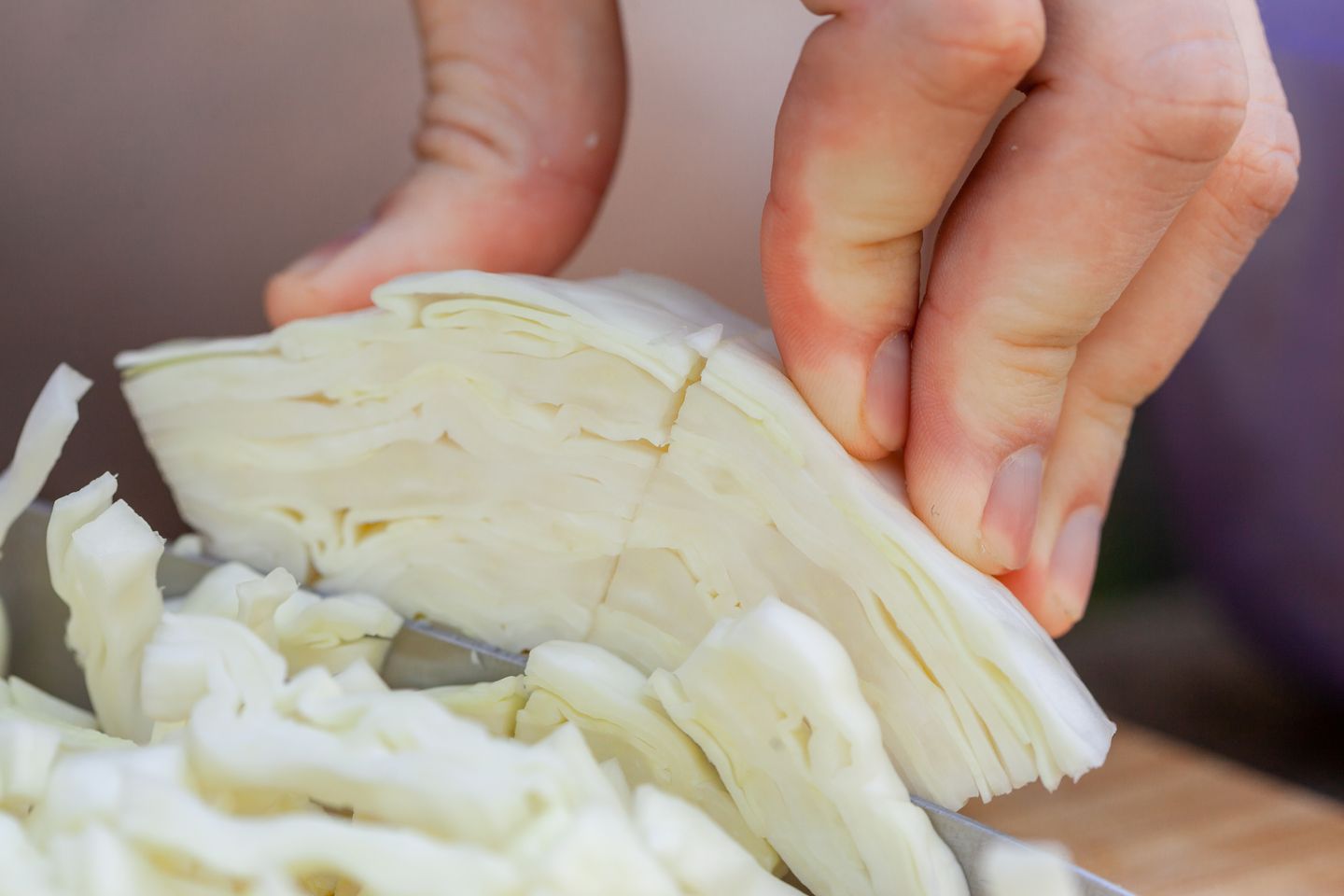
Choose a knife with a blade that can reach through the head comfortably. If the cabbage is broader than the length you can safely cut, use a smaller head for this job or first remove loose outer leaves for separate use. Set the cabbage on its most stable face. Cut down through the center toward the stem so each half receives part of the core. Keep your fingertips back and guide the blade with controlled pressure. If you feel the head shifting, stop and reposition it before continuing.
Lay each half cut side down. The work changes immediately. The cabbage now has a broad flat face and no longer wants to roll with every movement. Look at the layers on the exposed side when you turn a half over. The pale triangular region rising from the stem is the core. The leaves curve around it in a tight pack near the center and sit in wider layers near the outside. How you use those curves determines the length and direction of the pieces.
Keep the core when the piece needs support
For roasted wedges, cut each half into sections that retain a small part of the core. Aim for similar thicknesses through the middle. The outside edge naturally tapers. A narrow wedge cooks through faster and may develop crisp edges, while a thick one can stay firm at the center after the leaves on top begin to brown. If one wedge is much larger than its neighbors, cut it again before seasoning. Make another cut through the core so both new pieces keep a bit of the anchor.
Set the wedges flat on a tray and brush or toss them with the oil and seasonings the recipe calls for. Keep enough room to turn them with a spatula. Some leaves may fan outward or come loose as the wedge cooks. If small detached leaves have already browned while the thicker pieces need time, move the loose pieces to a plate. A finished wedge can sit on a plate in its original shape, ready for a diner to divide into forkfuls. The core has done its job even if some of it gets left behind at the end.
There are times when you want a broad flat surface instead. A thick crosswise slice can show off the tight rings near the middle and put a substantial face against a pan or roasting tray. Outer slices tend to be smaller and less well connected. Treat those pieces as a different cut instead of trying to make them behave like the center. They can become the first loose bits that go into a soup or a sauté.
For ribbons, remove the hard part early
Cut a half into quarters and rest each quarter on a cut face. Angle your knife along either side of the core to lift it out in a wedge. Take only as much as you need to remove the toughest section. With a young, tender head, a little pale rib can be pleasant in a cooked dish. In a slaw, a thick chunk of core stands out after the thin leaves have softened in dressing. Set the piece aside and decide whether to chop it for a cooked preparation or discard it.
Turn the quarter so your slicing cuts cross the layers. A fine slice makes short lengths where the leaves are small and longer ribbons toward the outside. If you want a bowl of slaw that is easy to serve with tongs, shorten the longest pieces with a few cuts before dressing. If you want looser ribbons for a quick skillet dish, cut a little thicker so the strips keep their edges. Use a few test cuts and pull the ribbons apart before preparing the whole wedge. Their thickness is easier to judge once the layers are separated.
A dense quarter can be taller than you need for delicate cuts. Split it into two lower pieces or take a group of leaves away and slice them on their own. A small stack that rests flat is easier to control than a tall stack that spreads when you press it. Put the slices into a bowl as you go. Leaves piling against the blade can make it harder to see the edge of your working piece.
Cut for the way the cabbage will cook
A broad leaf has a thin blade and a thicker rib. If you lay large leaves into a hot pan together, the flat parts may wilt while the stiff ribs stay crisp. Sometimes that difference is desirable. For a softer result throughout, separate the thick ribs, slice them across and give them a head start. Add the thinner leaf later. You can use the same idea with a cabbage quarter by putting the pieces from near the stem into the pan first.
A soup takes a different kind of cut. Fine ribbons tangle around the spoon and can make a bowl feel like a dish of noodles. Short squares or broad chopped pieces move with the broth more easily. Choose the shape according to what else is in the pot. For a soup with small beans, pieces close to the size of a bite of beans make it easy to get both on the spoon. For a dish with large potatoes, you can leave larger folds of leaf where you can see and taste them separately.
For a salad, try eating a plain slice before preparing the rest. If the strip pulls stubbornly between your teeth, make a finer cut or slice across the ribs. If a fine ribbon feels fragile and damp, a slightly wider one may keep more crunch after dressing. A dressing with salt can draw out water as it sits. Dress only the amount you intend to serve soon when you want a particularly crisp result. The leftover cut cabbage will give you more options if you store it chilled and undressed.
A red cabbage can make the cut easier to see. Set one wedge next to a few ribbons before you dress them and look for the pale ribs against the purple leaves. Where a piece contains a big section of white rib, it will likely stay crisper than a thin purple fold. If you prefer a more even texture, separate those pieces and cut them a second time. The color gives you a quick way to see the differences you would otherwise discover only after the first bite.
Use the head in two different ways
A single head can be large enough for more than one meal. Start by making the cut that leaves you the most useful remaining piece. If you want wedges tonight and slaw later, take the wedges from one half and keep the other half whole until you need it. If you want a small pan of thin cabbage ribbons, cut them from one quarter. The unopened layers of the other sections are easier to handle than a bag full of loose slices that must all suit the same dish.
The way the vegetable arrives on the plate can matter more than an exact measurement. Take a little of the cabbage meant for a roast and slice it fine. Let one part of dinner be hot and soft, and season the other lightly for a cool crunch beside it. The same oil or lemon can belong to both parts. When you taste them close together, you can hear and feel what the cut did before the cabbage ever reached the stove.
There may still be a few pieces on the board when the main work is done. A strong outer leaf can be set aside for cooking if it is clean and sound. A tender rib can be sliced into a small pan with the next onion. With the awkward first cut behind you, even the pieces that failed to fit the original plan are flat enough to cut into something you can use.