The Order of a Tea Tray
Set out a small tea service around the hands that will pour, pass and clear it, with enough room for each guest to choose what goes into the cup.
8 min read
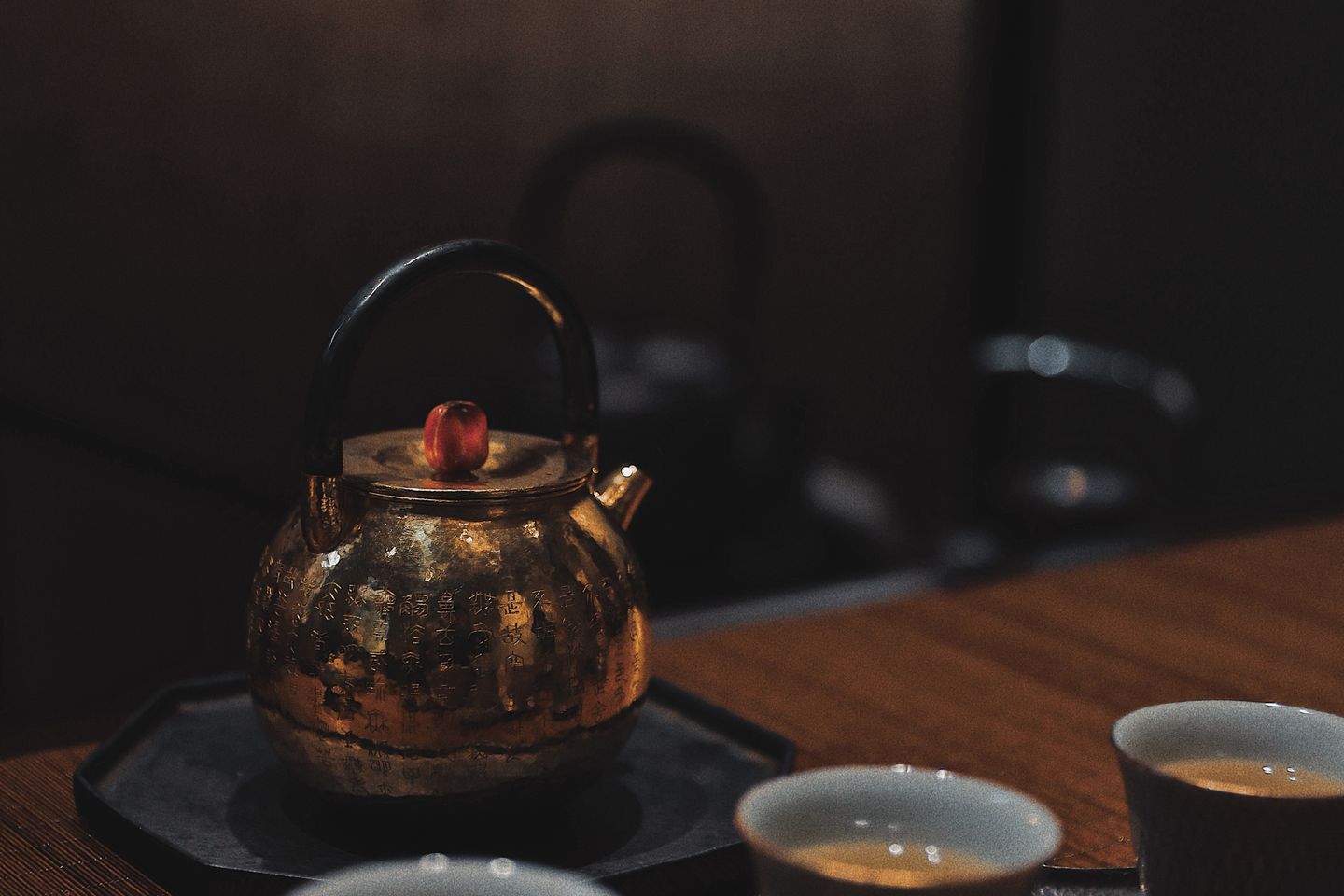
A pot and four cups can fit on quite a small tray until somebody has to pick up the pot. Then the handle needs room for fingers, the spout needs a clear route to each cup, and there should be somewhere to rest a wet teaspoon. A tea tray earns its keep when the things on it move. Its arrangement can make a person feel free to pour another cup, or obliged to ask somebody to rearrange the whole table.
A tray also determines how many trips the host makes to the kitchen. It can carry all the equipment for a small group in one journey. After that, the host can decide which work to do at the table and which work to finish out of sight. There is room for both a quick mug brought to a neighbor and a longer visit in which the pot returns a few times. The best arrangement depends on how many people are there and how long they want to sit.
Decide where the first pour will happen
If you are making tea for one other person, two cups close to the pot keep the first pour simple. When guests are spread along a table, decide whether you will pour the cups and pass them or set out cups for people to pour themselves. A low table in front of a sofa may be awkward to reach over with a full kettle. In that room, a stable side table can be a better place to pour and hand each person a cup. Leave a place near each seat where the cup can be set down.
Set up the route while the pot is empty. Take it by the handle as you would if it were full. You should be able to lift it straight up without bumping cups or spoons. Keep the spout turned away from people while you carry the tray. At the table, turn it toward the clear area where you will pour. Put the heaviest item near the middle of a tray you have to lift, and make a second trip if the load is awkward. It is easier to bring the pot separately than to steer a tray with no clear grip on its edges.
A pot that drips can sit on a small saucer or a washable trivet. Try placing a folded napkin where you can reach it with a free hand. Move small additions such as sugar or lemon away from the center so that a guest can reach them without brushing the hot pot. The tray might look a little less symmetrical from across the room. From a seat at the table, the open space will make the order feel obvious.
Choose cups for the pace of the visit
A large mug lets someone sit with a drink for a while without returning for more. A small cup makes it easier to offer a fresh pour and easier for a guest to try another tea. Neither shape demands a particular ceremony. A wide cup with a thin rim can feel comfortable to drink from, while a sturdy handle makes a hot cup easier to lift. Choose what people can hold comfortably and what your pot can fill at the rate you expect.
Check how much the pot actually holds with the lid on and the leaves or basket in place. A small pot might give four tasting portions or two full cups. Decide how much you intend to pour before filling the first cup. A set of mismatched cups may make capacities harder to judge from above. It can also help guests remember which cup they were using. When sizes differ, serve a modest amount at first and ask who would like more after everyone has one.
A saucer can catch drops and give someone a place for a spoon or a used tea bag. It takes additional room, so consider the furniture. A coaster and a common dish for spoons can work when a narrow surface cannot comfortably hold several saucers. If guests have to hold cups on their laps, do not also hand them a full plate. Make somewhere at a comfortable height for both objects to come to rest.
Let the tea stop steeping
The last cup from a pot can taste much stronger than the first when the leaves sit in the liquid between pours. For a tea that should taste similar from cup to cup, separate it from the leaves once it has steeped. Lift out a basket and set it in a dish, or strain the liquid into a clean serving pot. Keep a spot ready for a wet basket before you begin. Carrying it across a table while you look for a dish can make a trail of drops.
When making individual cups, bring each cup to the same place for its first pour or use a small pot to serve water at the table. Give guests room to put down their tea bags or infusers. If you offer a choice, a few distinct choices are often easier to handle than a box of packets that needs to be passed between every chair. An unmarked cup is harder to identify once the tea is poured, so mention which is which when you serve. Before you make a second round, ask whether anyone wants something different.
If a tea changes noticeably from one pour to the next, you can make that part of the visit. Offer a small first pour to everybody, then prepare another infusion if the tea is suited to it. Use the package directions or the preparation you know works for those leaves. Spend your attention on the people drinking it. They may want to compare the two rounds, or they may want to go on with a conversation without discussing the tea. The order of pouring should make either option easy.
Set out the additions people actually use
Milk, lemon and sugar can go beside the tray in small vessels if guests want them. Leave space for the serving spoons and a way to identify what is in a small pitcher. If there are different milks or alternatives, label them or tell the guests which is which. Give each vessel its own clean utensil where one is needed. A small dish can hold a few lemon wedges without needing to balance them on the edge of the tray. Offer water as well when it is easy to do.
Anything sweet or crumbly benefits from a plate. Place biscuits or slices of cake where someone can take one without reaching over a steaming pot. A large cake may be easier to cut before the tray comes in, especially if there is little room or the table is low. A few portions on a plate keep the rest available for later and make it easier to remove crumbs. If you offer something sticky, hand out napkins early enough that nobody has to ask with sticky fingers.
You can keep the table especially simple by serving tea first and deciding about food after everyone is settled. Some visits begin in the middle of another task, with a cup passed across a desk or set on a shelf while somebody finishes a phone call. A small clean place for the cup can matter more than offering three kinds of biscuits. If food arrives a few minutes later, there is time to clear a spot for it and see what people actually want.
A second cloth can be useful underneath a tray when a surface is uneven or likely to mark. Set it out before you bring in the tea and check that the tray sits firmly. The preparation can be especially helpful when a tray goes onto a dining table that is also being used for a puzzle or a piece of work. You can clear one bounded area, bring the tea in and remove it later without moving the rest of the table.
Make the second round easy
When the first round is poured, look at what has migrated. Spoons may have collected next to one person, and the lemon may have ended up behind the empty pot. Put the pot down where it can be collected without disturbing anyone's cup. Offer more when you can see that someone is finishing, and listen for an answer before filling a partly empty cup. Some people are glad to accept another pour. Others like the pace of one cup while they talk.
If the visit moves to another room, the tray can carry things back together, but take a moment to clear a path first. Empty the wet infuser into its dish and put loose spoons somewhere they cannot roll off. Let a still-full pot make its own trip. At the sink, deal with tea leaves according to the way you handle food scraps and wash the strainer before anything dries into its mesh. Check for drips under the pot and damp patches under the cups before you set the tray away.
A tray prepared this way can look like a collection of ordinary household objects. The cup may come from one set and the pot from somewhere else. What holds them together is the work they do over the course of a visit. Someone finds a handle when they need it. Someone rests a spoon without interrupting a conversation. By the time the tray goes back to the kitchen, those small accommodations have given the people around it more time to stay where they are.