When to Toast a Spice
Heat a small batch of whole spices just long enough to change their aroma, then cool, crush and use them where that difference belongs.
8 min read
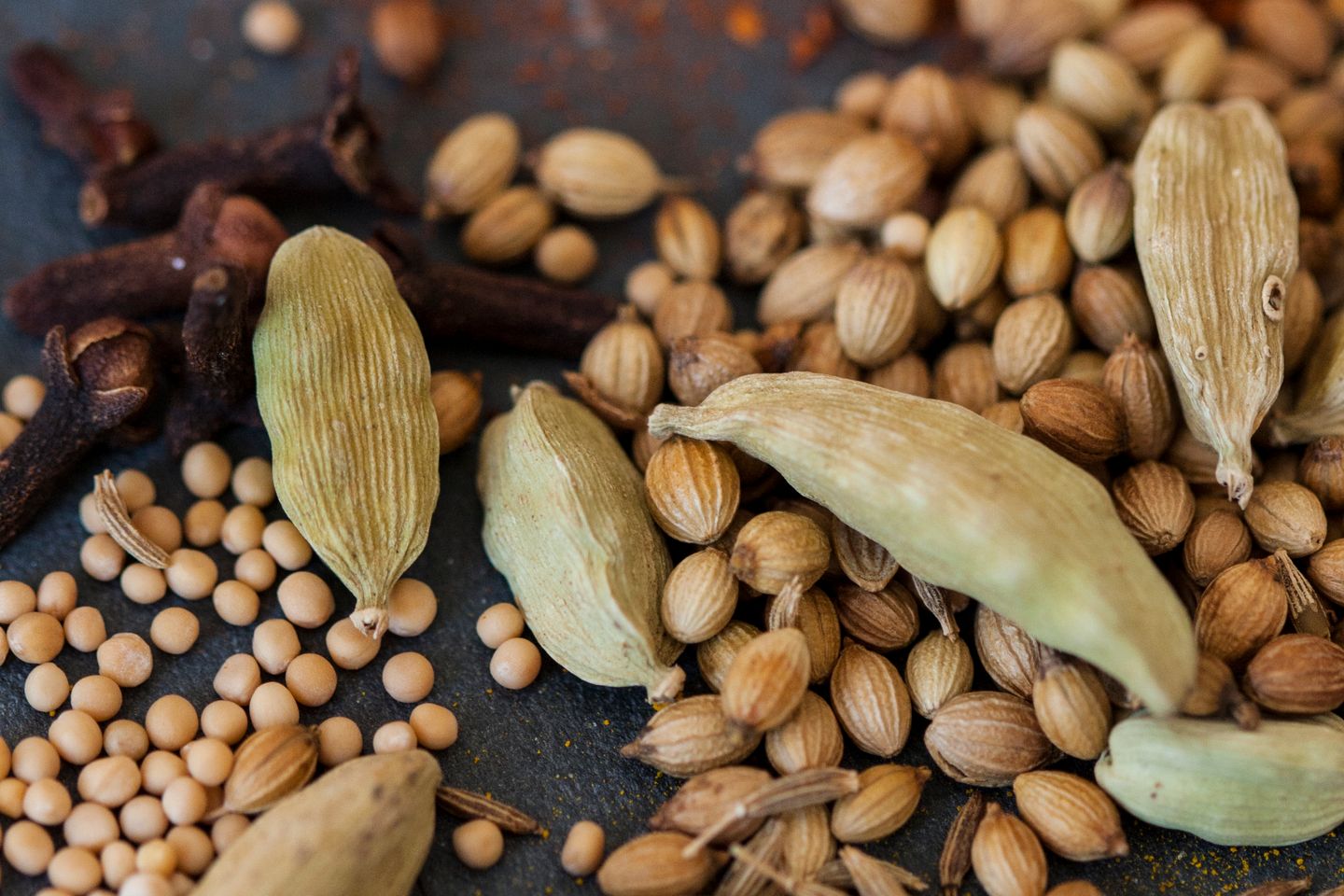
A coriander seed straight from the jar has a faint smell until it breaks. Crush one and the aroma opens up. Toast a few of the same seeds first, let them cool and crush them beside the first seed. The two piles can smell like different ingredients. Warmth can bring some notes forward and make others less obvious. Before you heat a whole panful, find out whether the change is one you want in dinner.
Dry toasting is a small operation. The spice, the pan and the moment you decide to stop make most of the difference. A full minute matters more with a few seeds than with a tray of vegetables. It helps to have a plate ready to receive them before you begin, and to put away the other ingredients until you can smell the first change without distraction.
Start with one seed at a time
Whole cumin or coriander seeds are good for learning because you can see individual pieces in a light-colored skillet. Set aside a small raw sample to compare with the heated one. The seeds should look sound and smell recognizable when you crush a little. Toasting changes the aroma they already have. A jar with a faint dusty smell is unlikely to regain the vividness of a fresh spice simply by spending time over a burner.
Try a single spice before combining several. Small seeds may take less time to heat than large ones. A spice with a dark color can be harder to monitor by sight. If you put cumin, coriander and broken pieces of dried bark into the pan together, you will have to stop when the quickest piece is ready or risk burning it while you wait for the slowest. Toasting separately takes only a little additional time with small batches and gives you a chance to choose the amount of each that goes into the final mixture.
Use a batch that can spread into a single layer. A teaspoon or two is enough for a first comparison. A crowded heap makes it harder to move the seeds and inspect the ones underneath. With a very small skillet, decide where the seeds can move when you shake it. A few seeds can jump over a low rim if you lift the handle quickly. A spoon or a gentle tilt gives you more control than an energetic toss.
Let the pan warm gradually
Put the spices in a dry skillet over modest heat. A light or medium-weight pan will usually respond fairly quickly to changes, while a heavy skillet can continue heating the seeds after the burner is turned down. Begin at a setting that leaves you time to observe. You want the seeds to spend a short stretch getting warm, followed by a change you can identify. If you start with the skillet at a very high temperature, much of the opportunity to notice that change is already gone.
Keep the spices moving with a light shake or a spoon. Look for a subtle change in color rather than expecting all of them to turn distinctly brown. Smell the air above and beside the pan from a comfortable distance. An aroma that was hard to identify a moment ago may become clear. Some seeds make a little noise or shift in the pan. That can happen at different points, so use smell and appearance alongside any sound. Stop at the first good aroma when you are learning a new spice.
If the aroma turns bitter or you see smoke, remove the skillet from the heat and let it cool safely. Discard a scorched batch. Empty the pan and wipe it once cool before trying again, since fragments can carry the burnt smell into the second batch. Bring the starting heat down and use a smaller amount. A first batch that warmed too slowly and still tastes pleasant can be used as it is. A first batch that burned cannot be balanced back into freshness by adding more spices.
Move the seeds before you get distracted
When the spice has reached the point you want, tip it onto a dry heat-safe plate. A warm skillet can keep toasting a small amount even off the burner. Spread the seeds in a loose layer and give them time to cool. If you are toasting a second spice, let the pan return to a more predictable temperature before you start. The second batch can change much faster because the base of the pan is already hot.
Crush the cooled seeds with a mortar or use a grinder suited to dry spices. The texture can be chosen for the dish. A rough crush leaves recognizable bits that can be pleasant over a bowl of roasted vegetables. A finer grind is easier to distribute through a smooth sauce. For a little batch, press a few seeds at a time in a mortar and check what you have. Continuing well past the point where you wanted to stop can turn a sprinkle with crunch into a powder that looks and behaves differently.
Smell a small amount of the raw and toasted batches side by side. Try a little of each on two pieces of plain bread brushed with oil, or over two bites of warm cooked potato. The warm food releases the aromas and gives the spices something to sit against. Use the same quantity in each bite if you are trying to compare the difference. One may seem brighter. The other may feel deeper or less sharp. Both can have a useful place in the same kitchen.
Give the toasted spice a place in the meal
A toasted seed can give a cool or mild dish more aroma at serving. Try a little roughly crushed cumin over a spoonful of yogurt or on a plate of beans. A few toasted coriander seeds crushed with salt can bring interest to a simple vegetable. Add a small amount near the end and taste. A larger quantity may make the toasted character dominate. When a dish already has deeply browned ingredients, a raw spice or a fresher addition may give it more contrast.
There are also good reasons to use spices without dry toasting. Some recipes heat spices gently in oil to carry their flavor through the dish. That method starts with different conditions and changes the oil as well as the spice. A powder that would scorch quickly in a bare pan can sometimes work in fat with close attention and other ingredients ready to join it. Follow the method for the dish before trying to substitute one kind of heating for another. Dry toasting is an option for particular whole spices, rather than a step to add automatically.
If a spice goes into a mixture that will cook for a long time, make a test with a small part added at the end. Compare the result with the part that has been simmering from the beginning. The flavor spread through the liquid may be more even in the long-cooked portion. The late addition may keep more of the sharp aroma you noticed at the plate. When both are welcome, divide the spice between stages so the two effects have different jobs.
A coarse toasted spice can also become a small crunchy finish with something less aromatic beside it. Crush a spoonful of toasted seeds together with plain toasted breadcrumbs and taste the mixture before scattering it over dinner. The crumbs make the spice easier to spread and give you room to adjust the strength. If one spoonful tastes right over a bite of soft squash, make a little more in that proportion. Keep the rest separate so any remaining crumbs stay dry until you use them.
Keep the useful amount within reach
Toast only what you expect to use soon when you want the contrast to be easy to notice. Whole toasted seeds can be kept in a clean dry container once they are fully cool, and a freshly ground portion is easy to make from them. Label the container so you can tell it apart from the raw seeds. A dark piece of glass or a cupboard can keep light away from the jar. Keep it somewhere dry and cool, and use the smell of a crushed seed to decide whether the flavor is still worth using.
When a small amount remains in the mortar, decide whether it belongs in the meal you already made. A little spice can go into a spoonful of the dressing. It can also be kept separate for a serving that needs a different finish. If the flavor is stronger than you wanted, adding all of it out of habit can make dinner harder to enjoy. The advantage of toasting a modest batch is that you can stop after the amount you need.
The next time you toast, set aside the raw comparison again if the spice or pan has changed. Write down what told you to stop. A first warm smell and a barely visible change in color are more portable observations than an exact number of seconds. You will hear different burners, use different pans and open jars of different ages. After comparing a few small batches, you can decide whether to heat the seeds in the first place, which is the choice that saves the most time.