Beet and Orange Salad with Dill
Arrange tender beets with orange rounds and pickled shallot, then finish the platter with dill, toasted pistachios, and a dressing made from the juice on the cutting board.
8 min read
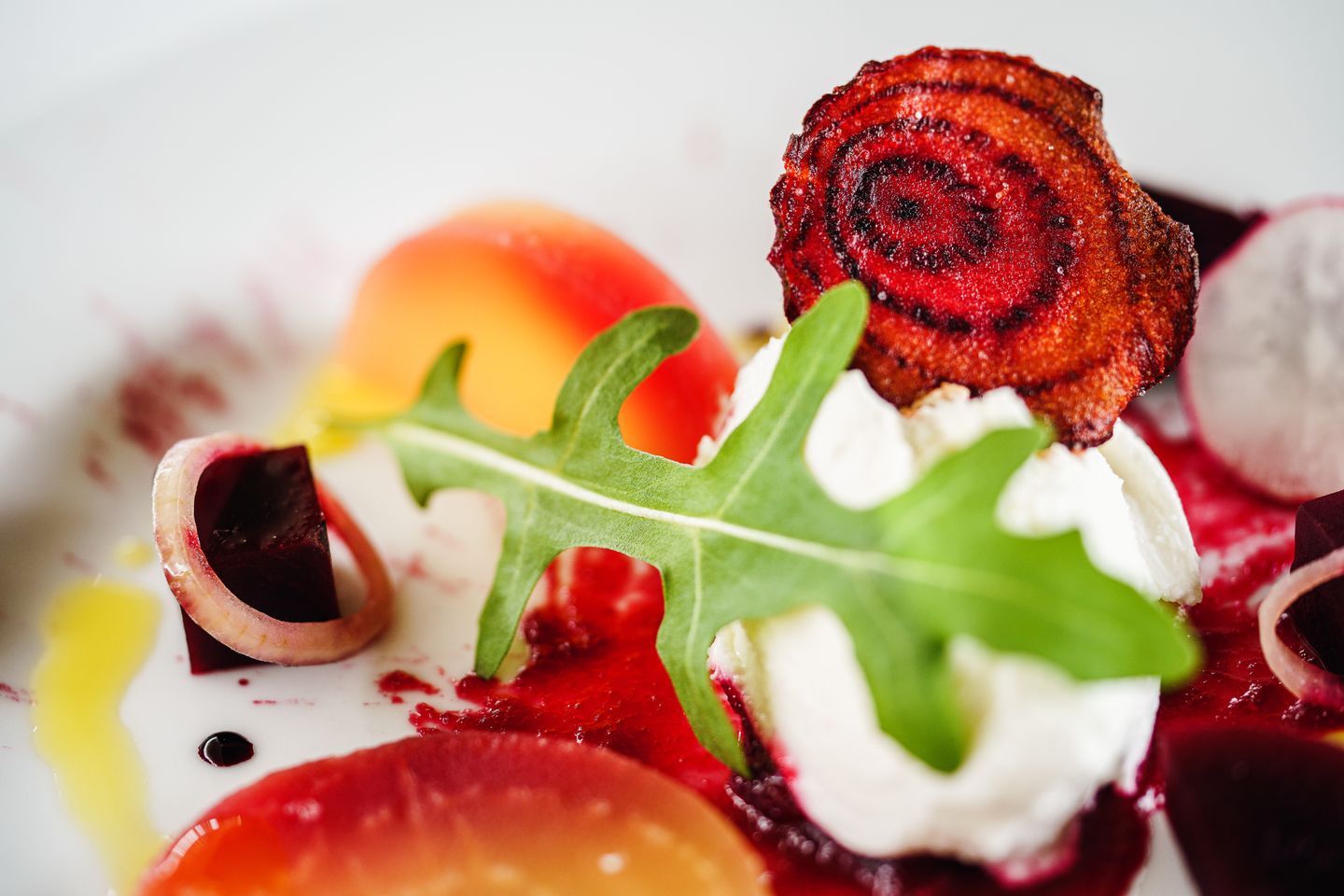
Beets stain everything they touch, including an orange that sits beside them for more than a few minutes. That makes the order of assembly part of this salad. Roast and dress the beets in their own bowl. Slice the oranges and catch their juice in another. Bring them together only when you can see how much room each needs on a plate. A person should be able to put both on a fork, and also to eat a whole slice of orange that still tastes mostly of orange.
Dill gives the plate its fragrance. A few long fronds look appealing, but much of the herb should be cut short enough to catch in the dressing. The shallot lends a different kind of sharpness from the fruit. It is worth soaking briefly in vinegar so a thin ring contributes a little crunch without overwhelming everything underneath it.
Ingredients for four side portions
- 3 medium red beets, about 1 pound with their tops trimmed
- 2 large oranges, preferably navel or blood oranges
- 1 small shallot
- 1 tablespoon red wine vinegar, plus more to taste
- 3 tablespoons extra-virgin olive oil
- 1 teaspoon Dijon mustard
- 2 tablespoons chopped fresh dill, with a few extra fronds for the plate
- 1/4 teaspoon fine sea salt, divided, with more to taste
- Black pepper
- 1/4 cup unsalted pistachios, shelled
Aim to buy beets of similar size so they become tender at nearly the same time. A beet about the width of a small apple is an easy size to handle. Large roots can take substantially longer to cook, and the outer layer sometimes remains tougher. If a bunch comes with sound greens, trim them off and save them for another dish. Leave a little of the stem on the beet and keep the tail attached for roasting. A whole root has less exposed surface to dry out than one with both ends cut flat.
Red beets give this particular salad a dark color that contrasts with the orange and dill. Golden beets are pleasant if you prefer a milder flavor. They can still tint a light-colored cutting board, though they will not produce the same purple streaks. If using both kinds, wrap them separately and dress them separately so their colors remain visible. Buy one extra orange if yours are small or hard to peel. The salad needs slices on the plate as well as a tablespoon or two of juice for the dressing.
Roast the roots until the center yields
Heat the oven to 400°F (205°C). Rinse the beets, scrubbing away any soil. Put them in a small baking dish and add about 2 tablespoons of water. Cover tightly with foil or use a close-fitting ovenproof lid. Place the dish on the middle rack. Begin checking after 45 minutes. Most medium beets will need about 45 to 70 minutes, depending on their diameter and how tightly the dish is covered.
Slide the tip of a paring knife through the thickest part of one beet. You should meet mild, even resistance all the way to the center. If the center stops the knife or the whole beet moves when you try to pull it out, continue cooking. Test the other roots as well. Remove any smaller beet that is already done and return the rest to the oven. When you lift the lid or foil, tilt it away from your face and hands so the steam can escape on the far side.
Cool the beets until you can comfortably handle them. Trim off the stem and root ends. Rub the peel off with a paper towel or a small knife. A layer that has cooked through generally slips off, though skin near the crown may need a little help. Work over a plate if you want to keep the board cleaner. Cut each peeled beet into slices about 1/4 inch thick or into slender wedges. Wedges are easier to pick up with tongs. Slices are easier to arrange in a layer with the oranges.
If the oven is already occupied by a hotter roast, steam the roots instead. Use a deep saucepan with a steamer basket, put the beets into the basket above simmering water, and cover. Keep enough water underneath to produce steam without letting it touch the beets, adding more hot water if needed. For this recipe the test with the knife matters more than the exact timing. Steamed beets produce less liquid on the board than boiled ones and can still be sliced cleanly after peeling.
Slice the oranges over a plate
Cut a small disk off the top and bottom of an orange to expose the flesh. Set the fruit on one flat end. With a sharp knife, follow its curve downward, trimming away the colored peel and white pith. Turn the orange and repeat until the flesh is exposed all the way around. Small scraps of pith can be trimmed after you are done. A few narrow bits won't matter, while a wide band will taste distinctly bitter.
Lay the peeled fruit on its side and cut across the sections into rounds. Put the slices in a shallow dish. Tip any juice from the cutting board into a small bowl. Squeeze the trimmings gently over the bowl for a little more. If you have several very irregular end pieces, squeeze them too. Aim for 2 tablespoons juice. The rounds are soft after peeling. Use a thin spatula to move them if they seem likely to tear when you pick them up by hand.
For a less formal plate, cut the peeled orange into small chunks. Slice through each round with two perpendicular cuts. The pieces can be added to a bowl with beet wedges, and each spoonful is easy to portion. Use a shallow bowl and toss just once. As you stir, the released beet juice will color the exposed surfaces of the orange. If you want to serve the salad over leaves, start with dry arugula or watercress. The juice clings best to dry leaves, and the pepperiness suits the sweet fruit.
Make the dressing before arranging the salad
Slice the shallot into very thin rings. Put them in the bowl with the vinegar and a small pinch of the measured salt. Separate the rings with your fingers so each has some contact with the vinegar. Let them stand for about 10 minutes. Meanwhile, toast the pistachios in a dry skillet over medium-low heat for 3 to 5 minutes, shaking the pan. Once they smell toasted, move them to a plate and let them cool. Chop roughly. Large pieces make it possible to taste the pistachio among the fruit.
Lift the shallot rings from the vinegar and set them aside. Whisk the orange juice, mustard, some pepper, and the olive oil into the vinegar. Add a pinch of salt and taste on a piece of beet. A very sweet orange may need another teaspoon of vinegar. A particularly acidic orange may need only part of the vinegar you used to soften the shallot. If you are worried about the balance, pour a little of that vinegar into a cup before adding the other dressing ingredients. You can always pour it back in.
Toss the beets with about half of the dressing in a separate bowl. Give them 5 minutes to take up some of the seasoning. Taste a slice before assembling and use a little more of the measured salt if needed. Keep the orange in its own dish. That gives you the opportunity to leave the slices as they are if their flavor is bright, or drizzle only a small amount of dressing across them at the end.
Assemble a plate that is easy to eat
Lay the beet slices loosely on a platter. Put the oranges into the gaps or over one edge of each beet, leaving part of each slice visible. Add the shallot rings, then most of the chopped dill. Spoon a little more dressing over the orange and the exposed edges of the beet. If the platter has a flat base, wait a minute and see whether the dressing pools. You can stop while the fruit still sits in a shallow film of dressing. Offer the rest at the table.
Scatter the pistachios and a few dill fronds just before you serve. If the salad will be carried to another table, keep the nuts in a small container and add them on arrival. They will soften after sitting in the orange juice, and the salad already has two soft components. Toasted sunflower seeds give some of the same texture when nuts are unsuitable. A few thin strips of toasted rye bread are another option and are particularly good if the salad is being served with soup.
For a lunch plate, serve the salad beside a piece of feta or a generous spoonful of thick yogurt. Let the creamy addition occupy its own part of the plate. Orange juice can thin the yogurt if everything is mixed in a bowl beforehand. If you're serving a few warm dishes, set the salad out cool but take it from the refrigerator about ten minutes before plating. The orange and dill are easier to smell when they are not ice cold.
Prepare the ingredients ahead
The beets can be roasted and peeled ahead, then refrigerated promptly in a covered container. Leave them whole until you need them if there is room. Whole beets keep their cut surfaces from drying and give you more options for lunch the next day. You can also whisk the dressing ahead and refrigerate it separately, then bring it out a short while before serving and whisk again. Cut the orange closer to serving so it does not spend hours losing juice into a dish.
Leftover assembled salad will become pink as it sits. Chill it promptly and serve it cold as a side or chop it coarsely for a sandwich with plain cream cheese. Add a handful of fresh leaves or new pistachios if you have them. The beets will have taken on some flavor from the oranges by then, so taste before using extra dressing. If you prepared the parts separately, you can build a second plate from them. One beet, a few pieces of fruit, and whatever dill remains make a useful accompaniment to toast and an egg without having to cook the salad a second time.