Cauliflower with Capers and Raisins
Roast cauliflower in broad pieces and toss it with a warm, sweet and briny dressing that settles into the creases.
8 min read
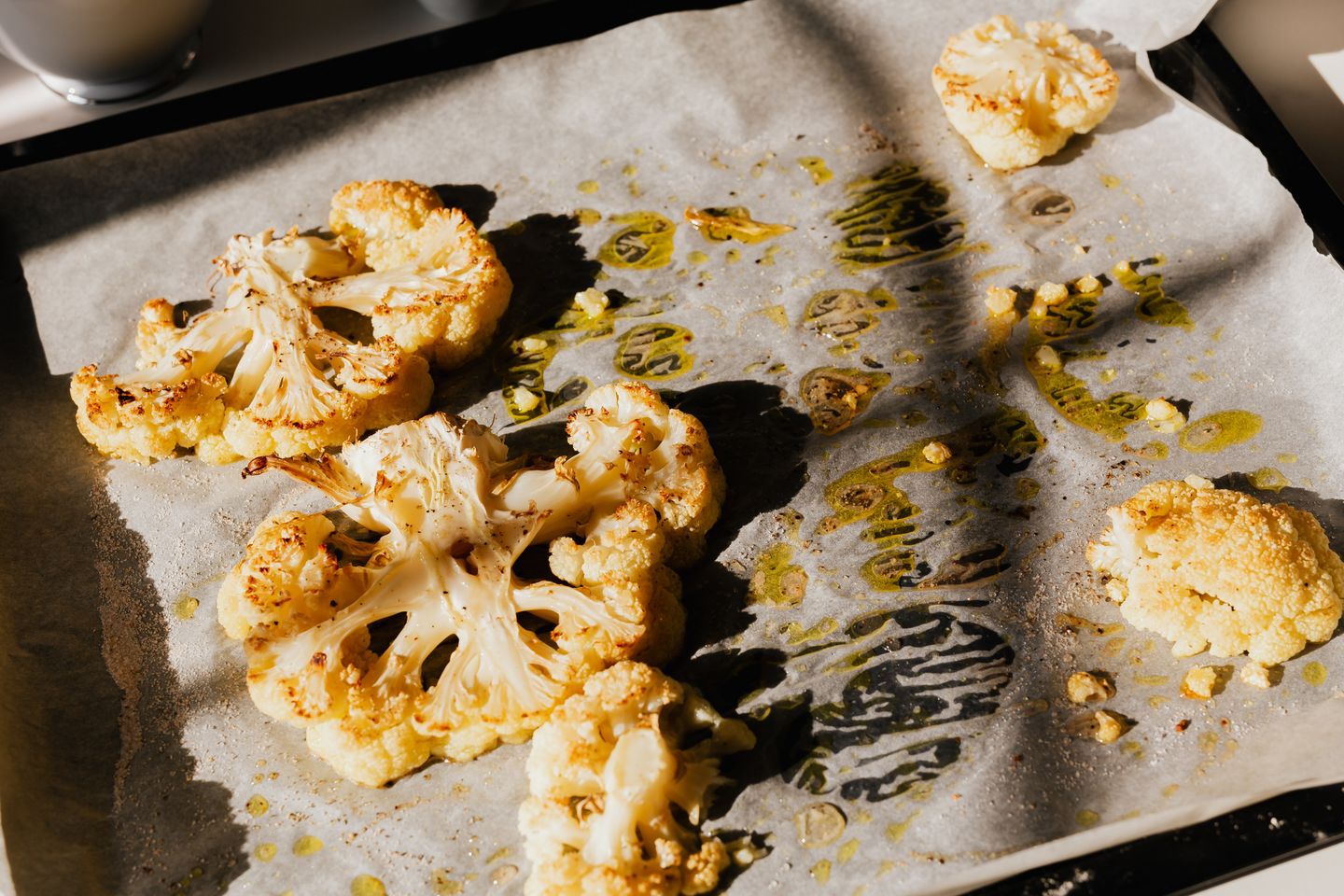
A cauliflower is easier to roast if you cut it from the bottom. Turn the head over, cut away the larger leaves, and look where the branches join the stalk. A small knife can find most of the seams. Work from the trunk outward until you have clusters large enough to split into two pieces. Then turn each cluster on its side and make a cut that exposes a broad face. The little crumbs that fall off can go into a bowl for another use, or onto a corner of the tray that you can clear before the larger pieces finish.
In this dish the cauliflower is served with a dressing of capers and golden raisins warmed with olive oil and vinegar. A dark cauliflower edge is slightly bitter. It tastes good with a raisin that has softened enough to yield against a tooth, and even better if there is a piece of caper in the same bite. The dressing does not have to reach every crease. Leave a few florets plain so you can taste what the oven did before the sweet and briny parts arrived.
Ingredients and a useful cut
For four side servings, use a cauliflower weighing about 850 grams before trimming, 2 tablespoons neutral oil, and ½ teaspoon fine salt. For the dressing, use 2 tablespoons golden raisins, 1½ tablespoons drained capers, 2 tablespoons extra-virgin olive oil, 1 tablespoon sherry vinegar or red wine vinegar, and a little hot water. Have a handful of flat-leaf parsley ready. For crunch, you can add 2 tablespoons toasted sliced almonds if everyone can eat nuts, or a spoonful of toasted coarse breadcrumbs. You will need a wide rimmed metal pan and a small skillet for the dressing.
Cauliflower sold loose may have dried a little at its cut base. Cut the dry end away and check the stalk. If it is firm and pale, peel off the outer layer and slice the core into short planks about a centimeter thick. They take on color very well. The inner leaves can roast too. Rinse them and hold them back until the last part of the cooking, since their thin tips brown much faster than the florets. Keep the big green leaves for stock or discard them if they feel tough and wilted.
Rinse the trimmed pieces and dry them with a towel. Look at the space between branches, where water can hide after you shake the colander. Arrange the florets on a fresh dry towel, cut side down, while the oven heats. This does not need to be an exact process. If you lift one and see a wet patch spreading underneath, leave it for another minute or blot it again. A little moisture near the center of a floret is fine. It is the slick water on the cut surface that keeps that face from taking color promptly.
If you want to cook the fine crumbs too, give them their own corner of the pan or a separate small pan. Dry them first, then toss them in a little oil and spread them thinly. Take them out when their edges turn tan. A spoonful of these roasted crumbs can replace the breadcrumbs in the finished dish. The ones caught under larger florets tend to soften, so sweep the board clean before tipping the large pieces into the bowl. A clean dry brush or the back of a flexible spatula will gather even the smallest bits.
Roast with room around the broad faces
Heat the oven to 220°C or 425°F. Toss the florets and stalk planks with the neutral oil and salt. Spread the vegetables in one layer and put the large cut sides down. Use two sheets if the entire batch has to touch in order to fit on one. Look at the thickness of the largest pieces. If one is considerably thicker than the rest, cut it again. A piece about the size of a large strawberry usually cooks before its tips turn brittle. Large clusters can be left intact if you are happy to give them more time and pull the small pieces first.
Roast for about 18 minutes before checking the pan. Slide a spatula under one of the broad pieces and look at its underside. A deep gold patch means it can be turned. If it is still cream colored and sticks, leave it a little longer. When the first side has taken color, turn the florets onto any other flat surface they have. Put the inner leaves on a free corner of the sheet if you want them. Coat them with a drop of oil first. Give the cauliflower another eight to twelve minutes or until a knife goes through the thickest stalks without a hard stop.
Cauliflower can come out soft and pale even when the oven is hot. This usually happens when the pan is full or the pieces are wet. If you see steam collecting under the florets at the first check, move some to a second pan and turn the pieces so that their damp sides can dry. If the whole batch has already softened, give just a few pieces a final turn against the metal. That is enough to add some roasted flavor to the plate. If the edges have gone dark and the centers are hard, lower the heat to finish cooking the middle. Check the smaller pieces and remove any that are ready.
Let the capers and raisins meet in the skillet
Put the raisins in a cup with two tablespoons of hot water. Leave them for about five minutes, then drain them, saving the liquid. Taste one. A supple raisin may need only a quick rinse, while a dry one can take a little longer. Chop any particularly large raisins in half. You want each piece to fit on a fork with a floret. If you use regular dark raisins, the dressing will look darker and may taste a little more like dried fruit. Start with the same amount and add more vinegar at the end if it needs a brighter edge.
Check the capers before using them. Brined capers can be drained and used as they are if you like their salt. If they are especially strong, rinse them briefly. Salt-packed capers may need a short soak before they are pleasant to eat. Large ones can be chopped. The finest little capers look good whole against the cauliflower. If there are no capers in the pantry, a few chopped green olives can supply the briny flavor. Add them at the end so they stay fairly firm, and taste before adding extra salt.
Warm the extra-virgin olive oil in a small skillet over low heat. Add the drained capers and raisins and stir for about a minute. Turn off the heat. Add the vinegar carefully along with a teaspoon of the raisin soaking water. Stir and taste a little with a piece of cauliflower. Use more vinegar if the first impression is sweetness. If it seems too salty, add a little more soaking water or olive oil. You can crush a few raisins against the side with a spoon to disperse their sweetness when the cauliflower has become especially dark. The dressing should be loose enough to spoon, with very little oil left on its own in the pan. It can stand while you finish roasting the vegetables.
Keep some of the roasted surface uncovered
Arrange the cauliflower on a shallow plate. Use a spoon to put the capers and raisins into the spaces between the broadest pieces. Spoon a little of the liquid over the vegetables but keep some of their browned surfaces dry. Chop the parsley and scatter it over the plate. Add almonds or crumbs just before serving. On the table, pass the skillet or a small bowl containing any remaining dressing. People who like a stronger bite can look for a spoonful with more capers, and everybody gets a chance at the darkest pieces.
Serve with a bowl of beans, a plate of roasted fish, or thick slices of toast. If the cauliflower is the main part of a lunch, spread ricotta or plain thick yogurt on a slice of toast and put the florets over it. A squeeze of lemon may be enough if you have already used most of the dressing. For a pot of cooked grains, chop the roasted cauliflower into smaller pieces after cooking and fold them into the warm grains with the dressing. Add a few spoonfuls of broth if the mixture feels dry. The softer cut faces can help bind everything together.
Chill any leftovers promptly, keeping extra dressing in a separate covered container if there is enough to save. Reheat the cauliflower in a dry skillet or a hot oven. It will be a little softer after a night in the refrigerator, but its cut sides can take color again. To use it cold, slice the large florets lengthwise so they fit on a piece of bread. Put a few raisins and capers under the slices, where they will stay in place. Add a handful of fresh leaves to the top. The original plate took an oven and a skillet, and the second meal can be made with a knife.