Chickpeas on a Hot Sheet
A dry towel and a wide tray turn canned chickpeas into a warm, crisp-edged topping for a bowl of cucumbers, grains, and tahini.
8 min read
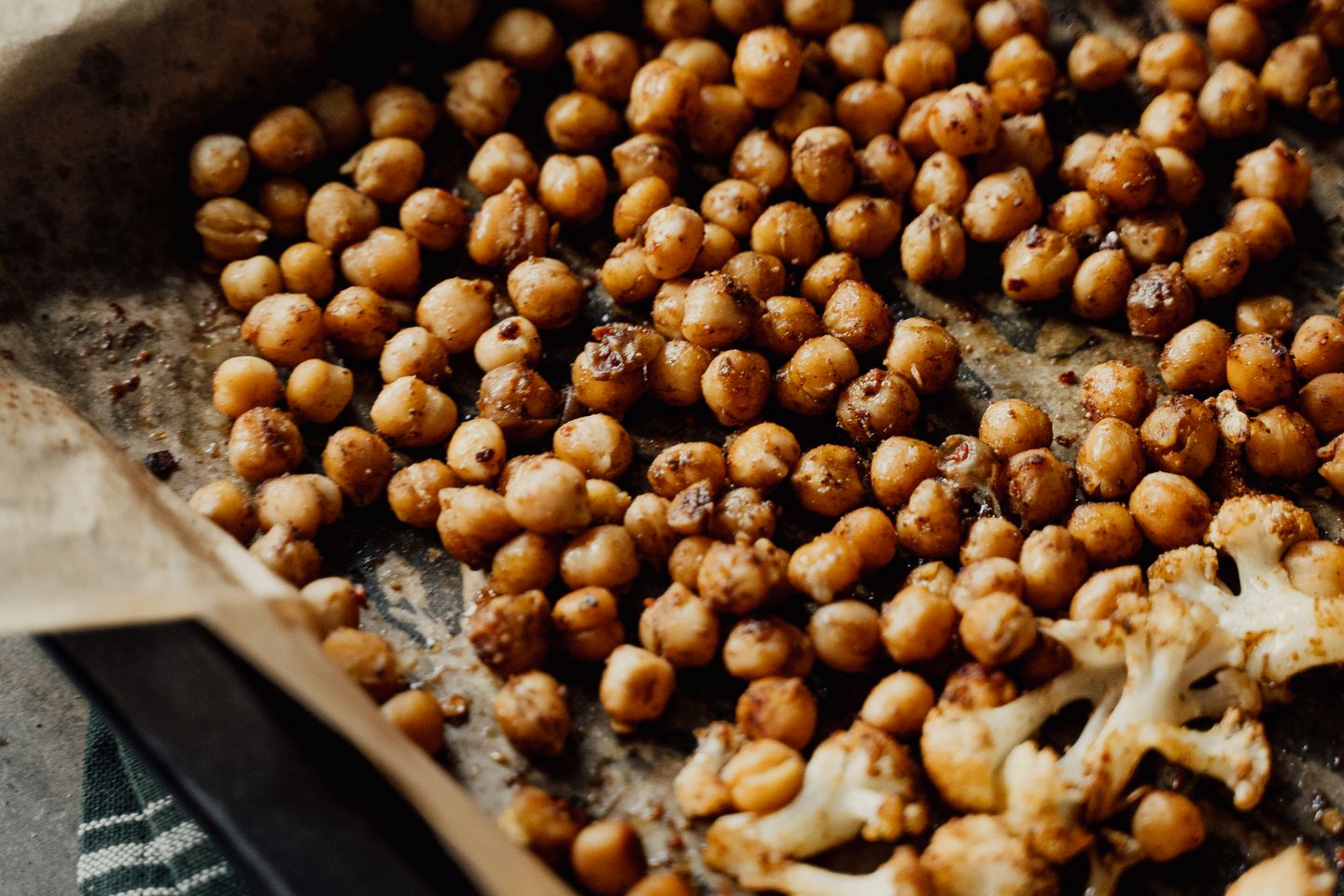
Leave a few roasted chickpeas on a plate while you finish chopping a cucumber. The ones that roll away from the pile will stay crisper than the ones buried underneath. There is a practical lesson in that plate. Chickpeas can come out of an oven with quite a bit of moisture still inside them. When they sit in a heap, that moisture softens their skins. Spread them out and they stay more interesting. They don't have to snap like snack nuts. For dinner, a little give inside the crisp rim is part of what makes them good to eat by the spoonful.
This recipe starts with canned chickpeas and ends with a grain bowl you can take in several directions. The chickpeas are seasoned separately so that the bowl never depends on an even distribution of sauce. The cucumbers are salted just before serving. The tahini dressing is made thin enough to spoon onto individual bites. Do those things in that order and the meal still works if the rice is a leftover from yesterday or the cucumbers are all you have from the produce drawer.
Get the chickpeas dry enough to roast
For four modest bowls, use two 400 gram cans of chickpeas, 2 tablespoons neutral oil, ½ teaspoon fine salt, and ½ teaspoon each ground cumin and sweet paprika. For the bowl, have 3 cups of warm cooked farro, brown rice, or bulgur and about 300 grams of cucumbers. A handful of mint or parsley is enough for four servings. Set out 3 tablespoons of tahini, one lemon, and cold water for the dressing. Add a pinch of salt to the dressing once it is mixed. Plan on one large metal tray or two smaller ones.
Open and drain the chickpeas in a colander. Rinse them briefly and shake the colander several times. Tip them onto a clean kitchen towel and roll them gently with a dry part of the towel until they no longer leave wet prints. Some skins will come away. Collect the ones that are already loose. There is no need to peel every chickpea. Paper-thin skins left in the bowl catch oil and may darken before everything else is ready. If you like their crispness, keep a few. A whole tray of detached skins is harder to season evenly and can give the small chickpeas an unpleasant burnt flavor.
Check a small spoonful from each can. Some brands use quite firm chickpeas, while others cook them until they split easily. If most of yours split when handled, leave them in larger clumps rather than shaking them aggressively in the mixing bowl. A chickpea with its skin partly peeled can become particularly crunchy where the inner surface touches the tray. If they are firm and their skins seem stubbornly slick, give them a second pass over a dry towel. This is one job worth doing before you turn your attention to the dressing.
Get the heat to the pan
Preheat the oven to 220°C or 425°F. Set a rack near the middle. Toss the dried chickpeas with oil and salt, then spread them out on the sheet. A bare pan allows a bit of contact browning. Parchment will work if you prefer it for cleanup, as long as its rated temperature is suitable. The chickpeas should roll apart if you nudge the tray. When they all move as a mat, there are too many on the sheet. Divide them before they go in. Put two trays on separate racks and switch positions partway through, or roast in batches.
After 12 minutes, shake the tray gently, then go back to preparing the rest of dinner. Listen when you take it out again. At first the chickpeas sound heavy and quiet against the metal. After more time they make a faint dry rattle. Start tasting at about 22 minutes, choosing one large and one small chickpea. If the largest one has a nearly leathery skin over a soft center, it needs more time or a few minutes to cool. If the smallest one is already very dark, tip those pieces onto a plate. Most batches finish between 25 and 35 minutes. The exact time depends on their initial moisture, size, and how much space you left.
Turn off the oven when the chickpeas have a speckled gold surface and the edges of any split ones are crunchy. Put the tray on a heatproof surface. Mix the cumin and paprika in a little bowl and scatter them over the warm chickpeas. The oil still on the surface helps the spices cling. Taste before adding more salt. Paprika can scorch on a hot tray if it goes in from the start, so adding it off the heat gives the pepper a softer flavor. Cumin seeds would take longer to perfume the chickpeas. If that is all you have, toast the seeds in a dry pan and crush them lightly before using.
Mix tahini without leaving lumps
Stir the tahini in its jar before measuring. A spoon lifted straight from a jar that has separated can contain mostly oil or mostly paste. Both make dressing awkward. Put the measured paste into a shallow bowl and add 1 tablespoon of lemon juice. Stir until the paste looks dull and stiff. It may seize a little, especially if the tahini is dense. Add a tablespoon of cold water and work it in fully. Repeat, one spoonful at a time. At some point the mixture will become much smoother and noticeably lighter in color. Stop when the dressing falls from a spoon in a thick line that breaks after a second.
Season with a pinch of salt, then taste it on a piece of cucumber. If the dressing coats your mouth and the cucumber tastes watery beneath it, add more lemon by the teaspoon. If the dressing falls off the cucumber entirely, stir in another teaspoon of tahini. Some jars already have a strong roasted taste, and more lemon can make that taste harsher. Dilute with a spoon of water and a little salt if the dressing seems too assertive. The sauce should bring out both the cool cucumber and the warm spices.
Make the dressing earlier in the day if that suits your schedule. Keep it covered and refrigerated. The paste thickens as it sits, so leave some water out of the first mix if you want to loosen it to a precise texture at dinner. Do not try to dress everything in the bowl at once. The grains absorb dressing faster than the chickpeas, and the bottom of the bowl can become sticky while the cucumber at the top still tastes plain. A spoonful across one side is often enough. Pass the rest.
Set out the bowl in pieces
Cut cucumbers into quarters lengthwise. If the seeds are large and watery, scoop out the loose center with a spoon. Chop the quarters into half-inch pieces. Sprinkle them with a small pinch of salt and let them sit for a couple of minutes while you bring the grains to the table. Tip off any liquid you don't want in the bowl. A little makes the grains easier to stir. Too much will thin the dressing and wet the chickpeas. The cucumber can also be served unseasoned when there is plenty of dressing and you want to save some cut pieces for the next day.
Spoon warm grains into shallow bowls and place the cucumbers and chickpeas next to them. Keep most of the chickpeas exposed, especially if the grain is steaming. Add torn mint leaves or chopped parsley. Put the tahini over the grains and add a little more lemon if the bowl needs brightness. If you have an extra handful of leafy greens, dress them lightly and tuck them between the grains and the cucumbers. The green leaves catch any drops of dressing that would otherwise fall to the bottom.
For a bowl without grains, slice a few thick pieces of good bread and toast them until they take some color. Put the bread down first and add the cucumbers with a spoon of their liquid. The bread will soften where the cucumber touches it and remain crisp around the edges. Spoon the tahini into the open spaces and scatter the chickpeas last. For a different kind of sharpness, put a few sliced radishes in a little vinegar for ten minutes and drain them well before adding them with the cucumber. They make a useful substitute when the cucumbers on hand are soft or scarce.
If you want a packed lunch, carry the parts in separate compartments or jars. Chill the cooked grains and the chickpeas promptly and keep the lunch cold. Bring a spoonful of dressing in a separate container. The roasted chickpeas will soften by the next day, but they still make a good lunch. For a warm serving, reheat the chickpeas on a dry tray until their outsides regain some texture. They can also go on soup, along with herbs that would have gone into the bowl. Sprinkle them on each portion at the table. Once they sink into the broth their edges soften, and there is no harm in that, but the first dry spoonful is worth having.