Mushroom Rice in One Pot
Brown the mushrooms in the rice pot, use the browned bits to season the broth, and leave the lid alone while dinner cooks.
8 min read
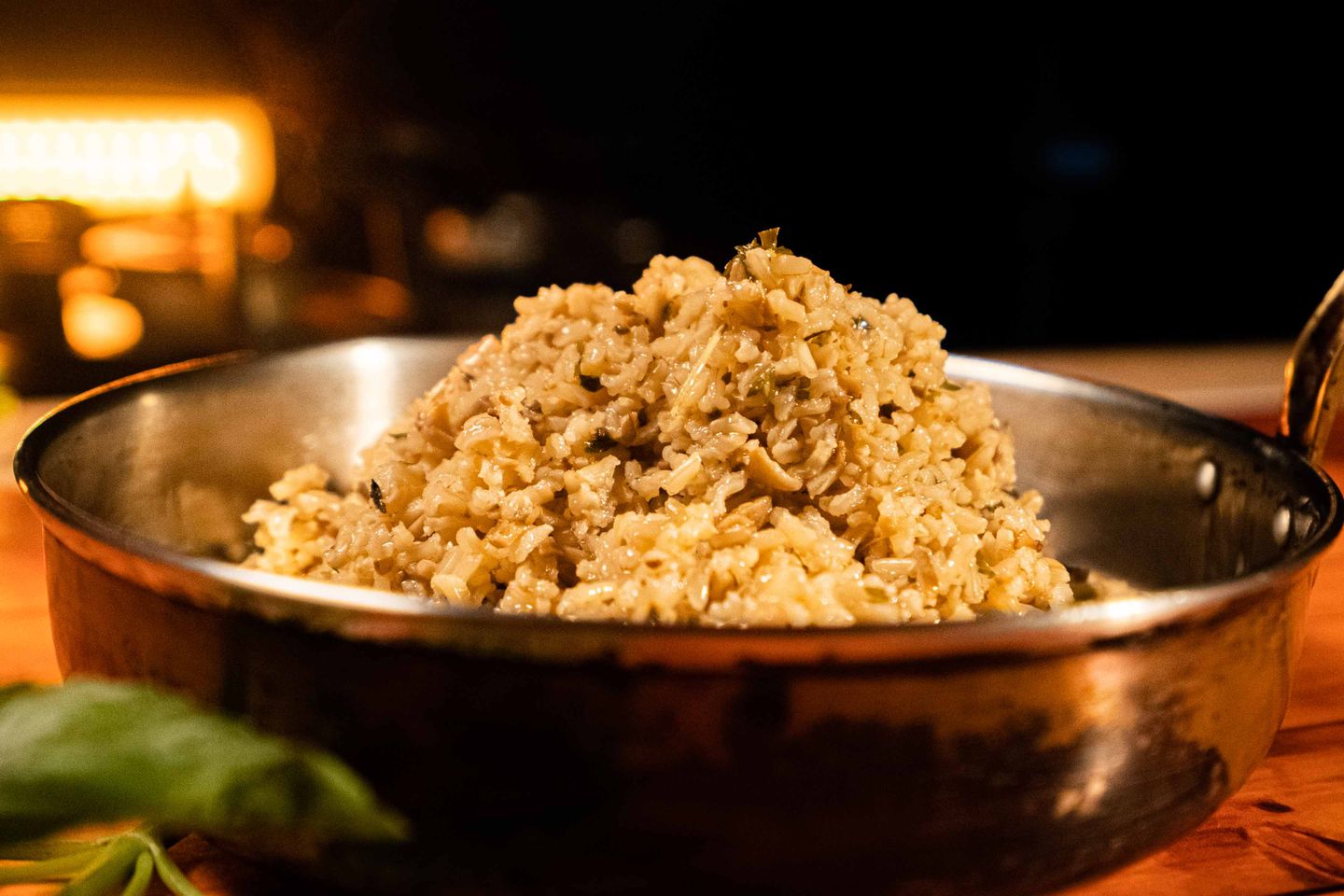
Mushroom rice is a good place for the last half of a bag of cremini mushrooms. It is also a good place for a full pound bought on purpose, because a pan of mushrooms shrinks faster than seems reasonable. The method makes use of two textures from the same purchase. Most of the mushrooms stay under the lid with the rice, where they soften and season the liquid. A smaller share goes back in when the lid comes off. Those slices still have a browned edge, and you can tell what they were before they went into the pot.
Use a wide saucepan with a lid that fits. If you have ever pulled the lid off a pot of rice and found it beautifully cooked except for a dry ring near the sides, you know why the lid matters. A small gap lets steam leave the pot unevenly. The right pot is the one you would trust to cook plain rice on a weeknight. In a very narrow saucepan, do the mushrooms in several batches. On a heavy stove with a broad burner, a deep skillet with a good lid can do the entire job.
Ingredients for four bowls
Measure 1 cup long-grain white rice and 1½ cups unsalted or low-sodium vegetable broth. If your rice package specifies a different stovetop ratio for that rice, use its quantity of liquid instead. You will also need 450 grams of cremini or ordinary white button mushrooms, 1 small yellow onion, 2 garlic cloves, 2 tablespoons neutral oil, 1 tablespoon butter, ½ teaspoon fine salt to start, and a few sprigs of thyme or a small handful of parsley. The butter can be replaced with olive oil. Have half a lemon ready to squeeze at the end if the rice needs something sharp. The mushrooms are the main ingredient after the rice, so buy ones with firm caps and stems that feel substantial.
Rinse the rice if that is how the brand is ordinarily prepared, and let it drain thoroughly in a fine strainer. The saucepan will be hot when it goes in. A strainer dripping water into the pot cools the surface and throws off the liquid measure. Clean the mushrooms with a damp cloth or a quick rinse followed by a thorough drying. Remove just the dry ends of the stems. Cut the mushrooms into slices about as thick as two stacked coins. If the caps are small, halves are fine. Chop the onion fairly small and slice the garlic thinly. Keeping the garlic in slices gives you a chance to pull it out if it starts to darken too fast.
Give the mushrooms room to lose water
Set the saucepan over medium-high heat. Add a spoonful of oil once the pot is hot, then a loose layer of mushrooms. They should hiss when they go in. Let them sit long enough to form color where they touch the bottom, then stir and give the new faces a chance. Mushrooms release water as they cook, and the sound may soften before it gets loud again. Look at the bottom. If there is liquid there, let it bubble away before expecting the next patch of brown. Add a small pinch of salt once the slices have shrunk.
Move the first batch to a plate and repeat with the remaining oil and mushrooms. If you are working in a small saucepan, use a third batch. There will be a few brown marks where the first batch touched the pot. They can stay. If the marks are turning black or smelling bitter, lower the heat and scrape off those spots before continuing. The trick is to build flavor a layer at a time. Fresh mushrooms are wet enough to loosen some of the brown residue on their own. A little stubborn residue is useful as long as it smells good.
You can tell how big the next batch should be by watching the first one. If a puddle surrounds each slice, a smaller handful will make the second batch faster even if you have to add another round. For a double batch, brown the mushrooms in a separate wide skillet and deglaze that skillet with part of the measured broth. Pour those juices into the rice pot so the useful browned bits make it into dinner.
Set about a third of the cooked mushrooms aside for the finish. The slices with the most color are good for that part. Leave the rest on the plate for now. Turn the heat down to medium and add the butter and chopped onion. Give the onion about five minutes, stirring often, until it looks translucent. Add the garlic and thyme leaves near the end and let them cook just until fragrant. If the pot seems about to scorch before the onion is ready, splash in a spoonful of water and stir. Let the water cook away before the rice goes in. A little controlled moisture here can save both the onion and the browned mushroom residue.
Make sure the rice gets its full measure
Tip the drained rice into the pot. Stir for a minute to coat the grains in the fat and mix them with the onion. The rice may get a little more translucent around the edges. It does not need to turn brown. Pour in the measured broth, scraping the bottom with a wooden spoon to pick up the browned bits. Bring the liquid to a gentle boil. Taste a little from the spoon. If you used unsalted broth, add the half teaspoon of salt now and taste again. If your broth already tastes quite salty, use less. A stock cube or concentrate can have more salt than it seems like it should once its liquid is absorbed by the rice.
Stir in the mushrooms from the plate except for the portion you have reserved. Level the rice with a spoon. Put on the lid and turn the heat to its lowest reliable setting. Cook according to the timing on your rice package, usually about 15 to 18 minutes for ordinary long-grain white rice. On an electric stove that stays hot after being turned down, it can help to move the covered pot to a second burner already set to low. You should hear a quiet simmer early on. The lid should not rattle or spit broth. As the rice takes up the water, the noise will become much quieter.
Turn off the heat and leave the lid in place for 10 minutes. The steam needs somewhere to go, and this gives the grains at the surface time to finish. Once you lift the lid, a few little holes in the surface are ordinary. Check a grain from the top and one lower in the pot. If both are tender, fluff the rice with a fork, stopping before you mash the mushrooms. If it is firm and the bottom looks dry, add 1 or 2 tablespoons of hot water, put the lid back on, and give it several minutes over low heat followed by another rest. If the grains are tender and there is just a little free moisture, fluff gently and let it escape uncovered for a few minutes.
Use the finish to decide what the rice needs
Fold in half the reserved mushrooms and scatter the rest on top. If they have gone cold and you have another skillet to hand, give them a brief turn over medium-high heat before adding them. Otherwise the warmth of the rice is enough. Chop the parsley just before using it if you chose parsley. If you started with sprigs of thyme, remove any bare woody stems. Add a little pepper. A few drops of lemon on a forkful will tell you whether the entire pot needs any. The effect should be a clearer mushroom flavor. If the first thing you taste is lemon, leave the rest of it on the table for anyone who wants more.
Rice cooked this way can take other vegetables, but the timing matters. Defrosted peas can go in just before the rest under the lid. Spinach fits better after cooking, sliced thinly so the residual heat softens it. A handful of roasted squash can go on top, where it keeps its edges. Adding a wet vegetable alongside the broth is a different calculation. Tomatoes or frozen spinach can release enough liquid to change the texture of the whole pot. When in doubt, cook them separately and fold them through after you know the rice is ready.
There is no need to add a second main dish if you have a good sharp salad or a bowl of yogurt on the table. For a more substantial meal, top each serving with a spoon of cooked lentils, a firm egg, or a handful of toasted nuts if everyone can eat them. Leftover rice needs prompt refrigeration in a shallow container rather than a long rest in the covered cooking pot. Reheat only the portion you intend to eat, to 74°C or 165°F throughout. A skillet makes a nice second meal. Let a thin layer sit until the bottom begins to crisp, then fold it over with a spatula. Keep the bowl of lemon nearby. The more toasted the rice becomes, the better the little bit of acidity fits.